
ABOUT THE EPISODE
#Ep.052
Last week, the Supreme Court issued an order enabling the temporary registration of marriages for same-sex couples, citing its ignorance so far as unconstitutional. While the order is definitely one in the direction of progress for the LGBTQ community, the gesture pales when one realizes that the struggle for marriage equality has a stagnant history of over 15 years in Nepal. The Supreme Court issued a similar order for equal rights back in 2008. Instead of implementation, the community is handed another court order and is now, again, in wait.
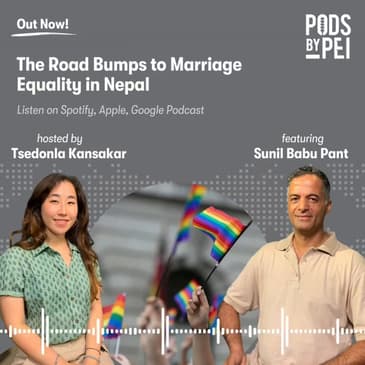
In this episode, former PEI colleague Tsedon Kansakar is in conversation with Sunil Babu Pant to discuss the history and status of marriage equality in Nepal. The two draw upon Pant’s first-hand experience to recall the landmark 2007 case Sunil Babu Pant and Others V. GoN, which pleaded for, among other things, equal rights to marriage. They then explore the significance of marriage equality not only in terms of human rights but also society and the economy.
Sunil Babu Pant is the founder of the Blue Diamon Society, an LGBTQ rights organization in Nepal. Pant is also the first openly gay national-level legislator in Asia. As a member of parliament, hIs legislative goals included equal justice, civil, and economic rights for the Qeer community. He led the landmark supreme court case that decriminalized homosexuality and added a different category of third gender in Nepali citizenship. He now continues to push forward those agendas as an activist.
[00:00:13] - [Speaker 0]
Namaste and welcome to Pause by PEI, a policy discussion series brought to you by Policy Entrepreneurs Inc. My name is Kushi Hang. In today's episode, we have former PEI colleague Chetan Kansakar's conversation with Sunil Babupont on the road bumps to marriage equality in Nepal. Chedon and Sunil discuss the history and status of marriage equality in Nepal. The two draw upon Sunil's first hand experiences to recall the landmark 2008 case Sunil Babupont and others versus Government of Nepal, which pleaded for equal rights to marriage, among other things.
[00:00:49] - [Speaker 0]
They then explored the significance of marriage equality not only in the terms of human rights but also society and the economy. Sunil Babu Pant is the founder of the Blue Diamond Society, an LGBTQ rights organization in Nepal. Pant is also the first openly gay national level legislator in Asia. As a member of the parliament, his legislative goals included equal justice, civil, and economic rights for the queer community. He led the landmark Supreme Court case that decriminalized homosexuality and added a different category of third gender in the Nepali citizenship.
[00:01:26] - [Speaker 0]
He now continues to push forward those agendas as an activist. We hope you enjoy the conversation. Namaste, this is Khedon.
[00:01:38] - [Speaker 1]
Namaste, this is Sunil.
[00:01:40] - [Speaker 0]
Welcome to the show, Sunil. Such a pleasure to have you on pods.
[00:01:43] - [Speaker 1]
Thank you very much for inviting me for this program.
[00:01:46] - [Speaker 0]
Of course, of course. So let's get on with the conversation, shall we? So the case Sunil Babupant versus the government of Nepal was a landmark case for Nepal. Revolutionary, not just for Nepal, but the world as a whole. Back in 02/2007, even America, a country heralded for individual liberties, had yet to legalize gay marriage.
[00:02:07] - [Speaker 0]
Now, for the listeners who don't know, could you explain this case and shed some light on why it's revered as such an important case in Nepal's history?
[00:02:16] - [Speaker 1]
Thank you. It's a landmark case because it was first in the history of Nepal. Such a case has been brought to the Supreme Court of Nepal by sexual and gender minority communities, demanding all the discriminatory laws to be scrapped or amended, but also demanding to end all kinds of violence, especially state sponsored violence. There used to be a lot of police and security brutality against this community then. But also defying binary gender.
[00:02:50] - [Speaker 1]
So Nepal became the first country when this verdict came from the Supreme Court back in 2007 that recognized more than two genders. So it was really remarkable, but also shared a lot of inspiration to all South Asians and to the rest of the world.
[00:03:08] - [Speaker 0]
What interests me, and I'm sure it's the same for our listeners, is why do we see this significant traction in 02/2007? What were the conditions, enablers, or even triggers that mobilized groups and institutions like you to pursue the agenda of the LGBTQ community?
[00:03:27] - [Speaker 1]
Perhaps it's timing, perhaps it's, you know, the movement was moving along and reached to a milestone where we were capable of challenging the government. Because when Blue Diamond Society was first registered in 02/2001, it was very difficult time in Nepal going through. Maoist insurgency was going on. There were a lot of security prisons in the street, A lot of LGBTIQ people, especially the third gender or the transgender people were in Tarai, I think, because they survive in begging during the wedding and childbirth. So they had to travel village to village.
[00:04:08] - [Speaker 1]
And they would come at a crossroad where the other side is controlled by Maoist and this side is controlled by the army. So they used to be raped by both sides. So that kind of atrocities were going on. Then royal massacre happened the same year. Then after a couple of years, when the king then, Rabi Kramshahar, took control of the, you know, took all direct power, dissolved the parliament and imposed state of emergency.
[00:04:37] - [Speaker 1]
That's where security forces were roaming across major cities with impunity. So it was worse for a community like us who were very marginalised. Back then, we survived and worked hard, started documenting human rights violations, even though there was no justice we could access to. And then 02/2006, there was a populist movement taking place against the monarchy's direct rule and the parties and people were demanding to restore the democracy. So we also took ourselves to the streets and then joined that democratic protest to reinstate democracy.
[00:05:18] - [Speaker 1]
That's where we found a bit of alliances. The NGO, the big NGOs then become friends. The political parties were inviting us because there were very few people actually in the beginning joining to the streets. So they started giving us space. So building alliances started by joining this populist movement.
[00:05:37] - [Speaker 1]
And then the peace accord happened between the Maoist and the government. Then there was interim government was set up. Then they were also calling for interim constitution for suggestions to be included. And then we did submit our demand. But I realised after a couple of months that the suggestion we submitted, filed them, was discarded into the dustbin, not even tabled properly.
[00:06:03] - [Speaker 1]
So that was very disappointing. And I would seek to the same leaders who were calling us, you know, and then telling us they would support after the democracy reinstated were refusing to have a meeting with me. So 02/2007, I saw the Supreme Court was doing all the fantastic thing at that time, you know, even defying the order from the king and other, you know, of autocratic decisions were taken down by the courts. The image was very positive about the court. So we decided maybe it's the time to take the government to the court.
[00:06:35] - [Speaker 1]
You know, we can understand the autocratic king not listening to us and mobilising, but the democratic forces who are now promises so much, you know, liberty, freedom and all for marginalised and everyone gender, sexuality, everything, but they were refusing to meet even. So that's the trigger point. Then I quickly called a lawyer, drafted the writ petition. I didn't have legal language as much. I still, you know, do not know a lot about legal and litigation procedures.
[00:07:08] - [Speaker 1]
But I said, look, this is what we want. We want to end all this violence, especially from the police. But also there are so many laws against us. We want to change. We want equality.
[00:07:19] - [Speaker 1]
We also want protection from discrimination. And if possible, also marriage. So there's a, you know, quite a big ambitious red petition we filed. The hearing started immediately. And after fourth hearing, the court gave a fantastic decision.
[00:07:39] - [Speaker 1]
I think the first statement was sexual and gender minority communities are natural. Because there were some, you know, people were talking about unnaturality of being, you know, sexual minority, a gender minority. So that was the statement. Then the three executive orders, the court issued it for the government to implement. First one to recognise their genders and issue their citizenship ID and passport according to their gender identity.
[00:08:12] - [Speaker 1]
That was landmark. First in the world, in the modern world, to recognise that. The second was to scrap and amend all discriminated laws and policies. And the third one was set up a committee to do a study on the Nepalese society what impact it would bring if we are allowed to have a same sex relationship registered. So they took six years, but they submitted a report in 2015.
[00:08:43] - [Speaker 1]
The committee also started pretty late. The government took long, I think four years, to just form the committee. So it took quite a while. But they did a good job and then they recommended the government to do a full marriage. So that's where we are now.
[00:09:00] - [Speaker 1]
The citizenship ID is given, started giving from 2011. Men, women, and other. So there's the three gender categories.
[00:09:11] - [Speaker 0]
So just to be clear, although the protection of the queer community was granted by the court, the verdict on gay marriage hadn't been made yet. But what was done was a committee was dispatched to study the repercussions, burdens, and benefits of legalizing same sex marriage. So Sunil, can you share with us how a study of this sort is conducted, Or more precisely, how this committee did it? And what were the findings and recommendations to the court?
[00:09:39] - [Speaker 1]
The committee's structure was already defined into the verdict. So it would be headed by the Secretary of the Health Ministry. And then there would be an anthropologist, someone from the Home Ministry, someone from social sector, and then also a lawyer on behalf of LGBTI community who also pleaded that case. So based on that structure, the committee was formed and they did survey with questionnaire, interviewing, then visiting different sectors like scholars, religious leaders, the community members, the families, professors, various sectors of politicians, journalists, they talk various sectors of the societies. They also had a foreign country visit to see.
[00:10:32] - [Speaker 1]
They visited Norve, I think, where same sex marriage was legalised already. And then so they went, talked to the politician there And the impact, they also visited a family, a lesbian couple who were raising two children and found it very normal, you know, and the children were growing very healthy. Yeah. And then they studied all other countries who have already done either full marriage or civil union kind of thing.
[00:11:00] - [Speaker 0]
So that sounds quite thorough. What were the outcomes of that study? And what were the recommendations to the court?
[00:11:08] - [Speaker 1]
They recommended the government that to allow full marriage because LGBTI people are not less and then should be considered, you know, on the same ranking like the heterosexual couples. So they recommended for full marriage and all the entitlements that the heterosexual married couple would have.
[00:11:31] - [Speaker 0]
So after all was said and done in 02/2007, one would expect the following years to be optimistic the LGBTQ community. Nepal is often even hailed as a beacon for LGBTQ rights in global spaces. But as we know, the following years were starkly regressive. Today, in 2023, marriage is only legally recognized as the coming together of a man and a woman. And not only did this make a previously gender neutral provision more narrow, but it also went against our constitution, which strictly states that no one can be discriminated against on the basis of their sexual orientation by the state or by any laws.
[00:12:12] - [Speaker 0]
So can you talk briefly about this and share other events that significantly harm the LGBTQ well-being in Nepal?
[00:12:20] - [Speaker 1]
I think the global attention and the hype really came because of the Supreme Court decision in 02/2007. But also the following year, I got elected as a Member of Parliament, only one in Asia, the first in Asia as an openly gay Member of Parliament. But then Nepal went in a mood of complete structural change. So we decided to write a new constitution. So there's not much attention to paid on any laws or anything.
[00:12:48] - [Speaker 1]
So we needed to have this guiding principle for the countries forward is the new constitution. So we worked, we drafted, and then the constitution is relatively nice, promising. Unfortunately, the first constituent assembly was dissolved before it could promulgate the constitution itself. But then second assembly election took place and then they adopted the draft from the first. So the first draft was extremely well written.
[00:13:20] - [Speaker 1]
On the second draft, because no one from the community was represented, I wasn't there, I had to move to UK and then the party didn't then encourage anyone or took anyone from the community. So they took it down quite a lot. So still in four or five articles that are mentioned in an affirmative way, a positive way that provides guarantees equality and non discrimination on the ground of sexual orientation and gender identities. So that's a good sign. And then of course, it's only 10 constitution in the world that does by constitution.
[00:13:54] - [Speaker 1]
So a lot of European countries who enjoy it in other way, do not have constitutional guarantee. So Nepal is a handful of countries in that sense. So in a way, it's very true. Yeah, it's a weekend of hope for LGBTI have become, particularly in South Asia, also in Asia. Because of Nepal's progress, India got huge pressure and they did struck down the Soderby law they inherited it from the British colony.
[00:14:21] - [Speaker 1]
And many other countries have done now. The court case is still referred in many other verdicts, judgement across the world. But what happened after 2015, from the second constituent assembly, already the policymakers were because there was no one around. And then it's very important to have included into the table of policymaking. So we really missed it.
[00:14:47] - [Speaker 1]
And then there's a huge gap. So I'm trying to encourage people to join the politics now for a longer term solution. So after the constitution, they, you know, we needed to change the old Molokian, the country code, making it more modern, but also in line with the new constitution. So they decided to also split it up to civil code separate and the criminal code and then procedural ones. So they worked on it, were very regressive.
[00:15:16] - [Speaker 1]
And then I was like, you know, grinding my teeth while being in The UK, able to do much, but only able to do online or something. But you know, you can't really do much online with the policy thing. So they did say, you know, fool the, some of the community activists there, you know, when they go and ask for point out this, the draft provision problematic. They say, no, it's only for the rest of the others. We'll do a very special good one for you.
[00:15:45] - [Speaker 1]
And I said, not listen to them. That's, that's a, you know, a total lie. A national law is supposed to include everyone. If they're saying this kind of thing, then they're cheating already. Do not believe it.
[00:15:55] - [Speaker 1]
That's what I was telling. But, you know, it already happened or already passed, approved. But this is a struggle now, you know, once it's done, know, undoing is much harder. So we have to take it all to the either litigation process or trying to convince a parliament when no one of yours is represented there, it's a humongous task.
[00:16:21] - [Speaker 0]
So going back to the topic of same sex marriage, to really illustrate the pains of the individuals, I want to know, Sunil, what are we depriving the community of when we deprive them of marriage and other rights and legal recognitions?
[00:16:36] - [Speaker 1]
See, the relationship that we want to be recognized is not just emotional bondings. There are a lot of other things comes around it. For example, a couple wants to operate a joint bank account. They're living together. They love each other.
[00:16:53] - [Speaker 1]
There's a complete trust. But because the marriage is not recognized, the same sex couple cannot have a joint bank account. And if one of the partner gets sick and somebody else has to take a decision on behalf, for example, a coma or something, emergency, the person who loves cannot take any decision because there's no relationship recognized. So they had to call back to those family perhaps who have disowned them already. So it doesn't make, you know, feel good.
[00:17:24] - [Speaker 1]
You don't feel safe. So you concern about that either for yourself or to your partner, what would happen if an emergency thing. But also if there's a great you know anxiety about what would happen when I die, you know that my partner cannot even conduct the funeral, the last rite. He cannot even join perhaps. And then the property I have earned with hard work, I cannot pass it to my partner.
[00:17:52] - [Speaker 1]
What would happen when I die to him or her? So that's kind of, you know, very genuine one, which is granted for the heterosexual couples here. So that's abuse disparity, discrimination by the state between the two citizens, two type of citizens here. It's not only that, you know, adoption is a problem and then not having a lot of rights and you are legally discriminated, treated as a second class or third class or fourth class, you're bound to, you know, get this low self esteem in your subconscious. So the progress is very difficult.
[00:18:33] - [Speaker 1]
It adds to the mental complexity and then very easy to get depressed and anxious. So mental health problems, you know, becomes a real concern for this community relatively to the others who are enjoying all the privileges and rights. So it's a lot of loss. And then it's not a small community. International studies suggest that LGBTI comprises of around 10% of the total population.
[00:19:01] - [Speaker 1]
So it's a huge unit, percent of GDP perhaps, who would have been much more productive, have to struggle with their daily life, you know, spending time on paperwork, fighting the discrimination. So how can one become productive and contribute to the whole social economy or national economy? So this country is also losing to it. The World Bank did a study saying having discriminatory laws and practices against LGBTI, it perhaps impacts and you know 20% of your GDP. So you know even if that even exaggerated and we take it half, 10% is huge number for country like Nepal.
[00:19:43] - [Speaker 1]
And if we allow for example, you know, protection and equality, the benefits multiplies. People become healthier. The children who are growing a bit different than the social norm would not worry about much of their own sexual behaviour or identities. They would do much better in their studies and professions. Then Nepal still has good income source, national income source from the tourism.
[00:20:13] - [Speaker 1]
The tourism would go up if they welcome the LGBTI tourists because you know, in the West they have recognized this long ago and then they call it, you know, pink dollar or something. And the two professionals working, you know, and not much expenditure on children and next life. So you have huge, much more disposable income. And then, so it's very lucrative market for the West, the LGBTI tourism is, which Nepal have been missing for a long time. We have giant countries, both China and India.
[00:20:46] - [Speaker 1]
The rich class is growing there, and then there's a significant LGBTI population, which perhaps would come and spend their money in Nepal. So even in an economic point of view, it's very beneficial to have providing all the equality and non discrimination for LGBTI communities.
[00:21:04] - [Speaker 0]
So how do you explain these regressive moves from the state? Not only is the state willing to behave unconstitutionally, but it also turns a blind eye to the data the research committee produced, which, as you mentioned, shows the benefit of LGBTQ marriage, not just in preserving human rights, but as you just mentioned, but also in the economy itself. So why do you think is the state still not willing?
[00:21:30] - [Speaker 1]
The state is, you know, it's a machinery, it's a system combined by all the individuals. And individuals have their own belief. Then there are a lot of persons in the bureaucracy, also in the politics, in the parliament, who perhaps or not perhaps, who definitely believe that homosexuality is some kind of less or not good for the healthy society perhaps. But also there is a fear. They think if they allow same sex marriage, all the men then will marry only men.
[00:22:01] - [Speaker 1]
And then the women will only marry women. Who will reproduce? Who will recreate kind of thing? I've heard those, you know, from few people who asked it, you know. And so they should know that, you know, not everyone is gay, not everyone is heterosexual either.
[00:22:15] - [Speaker 1]
And then countries have like, you know, Africa, South Africa have recognised same sex marriages since 1996. And then the demography has not changed. The population hasn't declined at all. It's just the other people also have the same, you know, loving relation is recognised and honoured by the state as to the heterosexual men and women. So the fear of, you know, one is humanity, but also those privileged class who are in the top.
[00:22:52] - [Speaker 1]
To feed their ego, they need somebody less always so that they can enjoy the fake kind of, you know, ego. So they want to have this disparity. So it's very odd and awkward for them to sit at the same table, same level to those who they have looked down upon for centuries. So it's going to take a long time for them to realise, but it's no choice now. You know, you can't say, look down upon somebody saying you're different.
[00:23:24] - [Speaker 1]
You know, it's not ethical anymore. You know, we all know it. So, you know, caste based discrimination, gender based discrimination, geography based or because of facial feature, the way you look or the way you prefer your sexual expression or gender identity. You can't discriminate to another human because they are not causing any harm to you. They want to enjoy their life.
[00:23:52] - [Speaker 1]
So why are you imposing your value, your way of life on others? So it's not possible. It's not okay, you know, any longer to still sit up on the top and then look others down and point fingers. So I was very disappointed when I hear the response from the Law Ministry to the Women Ministry because the Women Ministry finally drafted this same sex marriage bill, kind of bill, preliminary, and they sent it to the opinion from the Law Ministry. The Law Ministry responded asking a question and the fifth question was really deeply troubling.
[00:24:30] - [Speaker 1]
They said, What's the financial burden to the state if they allow same sex marriage? So if they ask that kind of question to a citizen who is supposed to be there to facilitate the citizens' right and protect them. If they ask, if they are concerned about, you know, economic burden to the state, you can understand the level of deep prejudice they're having in their subconscious. So there's no way out, except these bureaucrats, these politicians must learn now. We're not going to teach them every time.
[00:25:04] - [Speaker 1]
It's been twenty years, more than twenty years. So they can't say we don't understand, we don't know anymore. If you don't, then either leave or study. We're not your servant. That we feel we are obliged to go and treat their intellectual games or something.
[00:25:24] - [Speaker 1]
Yeah, you must understand all the human rights now. You must understand the country's demography, the people, the nature, etc. And then fulfil your duty that you are here to upheld the people's rights and protection. And if the people are more marginalised, pay more attention, invest more in the policy, in the programs, in the budget.
[00:25:57] - [Speaker 2]
Hi there. This is Somit Runeepane from Policy Entrepreneurs Inc. We hope you're enjoying Parts by PEI. As you know creating this show takes a lot of time and resources and we rely on the support of our community to keep things going. If you've been enjoying the show and would like to help us out we'd really appreciate it if you could become a patron on Patreon.
[00:26:20] - [Speaker 2]
Patreon is a platform that allows listeners like you to support creators like us with a small monthly donation. Your support will go a long way in helping us continue creating high quality content for you. So if you're interested in supporting our show and becoming a part of our community, head on over to Patreon and become a patron today. You can find us at patreon.com/podsbypei. Every little bit helps and we can't thank you enough for your support.
[00:26:49] - [Speaker 2]
Now let's get back to the episode.
[00:26:53] - [Speaker 0]
So for the larger half of its history, patriarchy has really been deep seated in Nepali society, society, which as you said, is reproduced through heteronormative structures and values. Let us inch a little into the social and private aspects of this issue now. How is the Nepali public perception of the LGBTQ community today? Do we see progress? Or is public perception and response still a barrier to breakthrough like gay marriage and their effective implementation?
[00:27:23] - [Speaker 1]
Look, it's not just patriarchal society. Also, you know, very hegemonical based on certain religion and caste. So I do find very amusing to see a lot of tolerance, especially among those, you know, lower strata of the communities, very supportive. Indigenous communities have less of a problem. I wouldn't call it no problem, but very less and very tolerant, very inclusive.
[00:27:48] - [Speaker 1]
And a lot of festivals you see have a lot of sexual diversity displayed, gender diversity displayed, whether it's Gaijatra or Maruni dance, for example, or Rupanjatra or the Dakini dance, you know. And there's some festivals which requires, you know, third genders. There are a lot of deities, whether it's in Vajrayana Buddhism or Mahayana or Hinduism or Tantric practices. A lot of, you know, gender neutral deities, we see them or same sex loving god or goddesses we see. So inherently, it's never been, you know, homophobic or gender phobic culture.
[00:28:33] - [Speaker 1]
But slowly patriarchy comes here since last two thousand, two thousand five hundred years, slowly taking over. Tasmania completely wiped out. The matriarchal elements are still there. Ajimas are still revered in Kathmandu Valley. There's Maithan or the mother goddesses are worshipped in whenever we see a big nice stone or a big tree or the two rivers, you know, coming together, or the two hills in the gurus or top of the hill is always, you know, one or the other, Maitan, whether it's Mani Manikamana, Anupuna or so many others, you know, Chindamasta is there.
[00:29:08] - [Speaker 1]
And so it's a very, in a way, matriarch country historically. But it had changed in the last two thousand five hundred years. So we find it tolerant here, but also the philosophies are very, you know, compassionate oriented. And then also the karma theory is here. So not much justice and punishment, but people come in a different form or the sentient beings come in a different forms and also take different forms.
[00:29:38] - [Speaker 1]
It's their own karma, you know, guides their destination, next destination. So in a way, they do see whatever whoever, you know, nature is it, it's his or her nature. Nothing to do with the, you know, sin or some kind of or somebody else, you know, God or somebody. So there is acceptance in that sense diversity. We're all diverse.
[00:30:04] - [Speaker 1]
We are all different. But in a soul level or the ultimate level, it's also equal because infinite life, everyone comes and repeats different sorts of life, different nature of life. So people do know that they may have been in the past men, women or third gender or others or even ancient sentient beings like ants or serpent or elephant anything Or they would become a next life also. So in that sense they do see a bit of apathy or sympathy or whatever. But then there is also this unfortunately patriarchy but very hegemonical, hierarchical society.
[00:30:45] - [Speaker 1]
There's a ruling class been last five hundred years or so. And then, yeah, so two thousand five hundred years, the patriarchy, the one man were, you know, dominating this part of the land. Then slowly it's the two castes become Chhetris and Brahmins. Now, last, I think, one hundred years or so, it's more Brahmin than Chhetris. Now it's completely Brahmin.
[00:31:09] - [Speaker 1]
All the party, you know, leaders are Brahmin. So they are I do think they understand. They do believe in karma theories etc. But it's very difficult for them to give up the privileges they have. That's why the resistance is here.
[00:31:24] - [Speaker 1]
I don't see a very ideological problem or the philosophical problem to accepting it. The difficulty for them is to give up their privileges. That's why resistance to even accepting and including the women. Even in a constitution guarantees 33% of women representation is still not happening. So giving up your privilege, it's extremely difficult for them.
[00:31:48] - [Speaker 1]
But I again tell them that it's, you know, you can't have it unjustly just for yourself forever. Learn to give up, learn to share and then make this, you know, society much healthier.
[00:32:01] - [Speaker 0]
Yeah, I guess nobody with power would willingly give it up or anything. But looking on the brighter side, are there any wins that you may have observed for the gender and sexual minorities in Nepal recently since 02/2007?
[00:32:17] - [Speaker 1]
So a lot of changes here, particularly I see a lot of young people coming out much more easily than we have and with perhaps with less opposition. The social media perhaps have helped it to get the information knowledge also finding quick you know comfort with the friendship and things like that and peer groups, etc. So yeah, and then much more visible now with the organisations and more people coming. I see they have a new way of creating visibility. They do flash mob every now and then.
[00:32:57] - [Speaker 1]
They also doing it June as a pride month which I disagree because they should do a pride month or pride day or pride week in other months where it's cooler, nicer. But because it's happening in America or Europe, they just copy it, which is not, you know, conducive. And it's American history. It's okay. We respect others history, but you celebrate your own history or march for your own cause here, do not copy.
[00:33:25] - [Speaker 1]
And then it's a climate was disaster, you know. June is best month in New York and London, but here it's like soaring 40 degrees Celsius. I saw the people trying to do, you know, in Nepalganger or Itari or in Iran, Biratnagar, everyone's sweating. Even for the Allies to come and join is very difficult, you know. And when there's kind of soaring heat, everyone stay cool inside.
[00:33:49] - [Speaker 1]
It's not a celebration. Blindly copying others is in and calling it pride. I don't agree with this. They should find better month. There's so many other festivals, The local days here, for example, the day Blue Diamond was formed should be another definitely a Pride Day or the Supreme Court gave us this fantastic verdict in 02/2007.
[00:34:12] - [Speaker 1]
You know, April should be also a nice month, should be celebrated as a pride day. There's a local festivals going on for centuries here. Gaijatra, Rupanjatra, Dakini dance, whole week long. And then you have this whole month of Lakhe festival, you know, is associated with queerness. It's man but performing in a big jammer, makeup, long hair, almost comes as a, you know, middle gender or more feminine in that than more masculine.
[00:34:42] - [Speaker 1]
So there's so many elements that you can trace to your own roots and cultures and celebrate it. But it's happening. Young people, you know, and also blindly copying the concept of identity. They don't like the third gender, middle gender or even local term like 'meeth', 'mithini' should be. Yeah, they're adopting gay, lesbian, also trans men or trans women, you know, and the idea of the healthy person, you know, the psychological misguidance from the West is coming.
[00:35:13] - [Speaker 1]
So they think they're born in the wrong body and they have a gender dysphoria. It's a very Western concept. So it's a healthy person. But you know, because of the psychology they have, the philosophy they have, there's only true gender is men and women. If you cannot become a man, better become a woman by transitioning your whatever, you know, physical alteration or something and vice versa.
[00:35:36] - [Speaker 1]
So this is very Western concept. Here we have, you know, more than five, six genders always accepted in different traditions, whether it's Tibetan or the mountain region here or Bajrayana here or even Hinduism, Jainism, Buddhism. Yeah, six genders. And then, so there are plenty of choices for you to find, you know, comforting identity, but also expression in a healthy way. You don't have to be rigidly copying and then feeling that you're unhealthy and then going through this expensive surgery and taking hormones, which perhaps not necessary.
[00:36:14] - [Speaker 1]
And it's also long term, it's very unhealthy. Yeah, so time to relook again. So I suggest this young generation not to blindly copy everything West does.
[00:36:24] - [Speaker 0]
So I guess Western influence has made the youth more compassionate and empathetic towards the LGBTQ, but also left a very strong mark in the way that we celebrate the community.
[00:36:37] - [Speaker 1]
Not just celebrate, but also you choosing your own core self in a bit of, you know, to Westernize and then seeing Western model as a standard has been counterproductive. It's becoming a problem in the West also. The health system is now really struggling because when they recognise gender dysphoria as a disease, then the health system is supposed to support them because in Europe, you know, you have everything covered. And it's hugely expensive and then, you know, people they give free hormones and then it doesn't work. They change it, add it, reduce it.
[00:37:14] - [Speaker 1]
And then after a couple of years, they want to come back and then because it takes a toll on your mental health, So then whole detoxification, rehabilitation starts and people go regret and they want to come back and do the desurgery or something, which is not possible. So it's a complex problem. It has become even in the West. And then fully becoming a woman or becoming a man, whether it's possible or not possible, is still a debate. Whether just doing your surgery, removing your male organs and putting the shape of a vagina, would that make you a woman, full woman?
[00:37:53] - [Speaker 1]
Because you can't still have a period, you can't conceive a baby, can't still do breastfeeding. And then the other way around is more complicated, so it becomes a discriminatory practice within your own community. The female born who are masculine wish to transit and become a trans man. It's almost impossible. So that practice is discriminated within the same community because someone is born male gets easier access and cheaper.
[00:38:20] - [Speaker 1]
Somebody born female is discriminatory. And then so they would never become a man as a trans woman, you know, a male born transgender who would easily become a woman certificate and become a woman in a passport in gender. So it's a discriminate itself. And then now a bit of concern in the West, not just a bit of huge concern, there's whole societies divided in the West. JK Rowland wrote an article three years ago, hugely, contentious and divided the whole West into two.
[00:38:54] - [Speaker 1]
Some are supporting, Oh, it's because of the feeling we support it. And the others said, No, no, we support them because of who they are, not trying to become who they are not. And then the Olympics last year allowed for six years to compete the transwoman with the woman. But then women athletes who, you know, spend a lot of time and resources, energy to make them fit and win the medal. And then they lose with transwoman because physically the bones are much stronger.
[00:39:24] - [Speaker 1]
Have. And so they're losing in running and swimming and other things. And also some countries have been a bit more liberal They allow trans women without surgery still having a penis and then but allowed to have a women passport. And now they had a problem because women's spaces are somehow special for some time. In a certain setting like swimming or going to sauna or breastfeeding places or in a prison inmate.
[00:39:54] - [Speaker 1]
So there was a scandal happened when a few years ago in Canada, the trans woman was, you know, put into the same prison cell with women. And then because it was a long term prison sentence, the trans woman raped another inmate woman. So it's kind of worked out. So you can't really, you know, judge that way and then believe that because of your look and expression, you have become a complete woman, a complete man, if you're not already born. So here in Eastern philosophies, it says, yeah, modify yourself, become makeup, modify, upgrade yourself, become best of yourself, but not somebody you are not.
[00:40:35] - [Speaker 0]
So moving the conversation back to the topic of same sex marriage, how can we build on the grassroot efforts for marriage equality made so far so that they can translate into the larger consolidation of rights and recognition of gender and sexual minorities at institutional levels?
[00:40:55] - [Speaker 1]
The regular process to have same sex marriage is the government draft the bill and then the cabinet approves it and then send it to the parliament. Then it goes to the parliament legislature committee. They consult And then when it's ready, they put it to the Parliament Assembly for vote or amendment if they need it, and then finally pass it from there. But it's going very slow. So this is two writ petition again in the Supreme Court now being heard.
[00:41:25] - [Speaker 1]
One from the lesbian organisation called Mithini, one from Blue Diamond Society recently filed. So they are asking to, you know, speed up ordering government to speed up the lawmaking process, but also demanding to have interim relief so that until the Parliament passed the law, there's a separate provision or a way out. And there's a possibility that the court may come with that decision asking okay you know have a bill at least within two years. They can give a timeline to the government but not to the parliament. But at the meantime while the government and parliament passed the law look we have this you know high courts where marriage is registered in each province have a separate file desk registered and keep it separately until the law is passed.
[00:42:18] - [Speaker 1]
So that allows the already living committed in a same sex relation to go and register their marriage. So that's the hope now.
[00:42:26] - [Speaker 0]
Building upon that discourse, what about the Nepali people? What can be done to alleviate the stigma around gender and sexual minorities in Nepal?
[00:42:38] - [Speaker 1]
The job is for the government. Should have been and always have been. Because if, you know, a community that is discriminated unjustly, It's the government's job to protect them and educate those, you know, perpetrators, for example, to have knowledge and understanding about this community. So it's been long, but there's a, you know, school curricula, seven and class 11, have included some into their textbook around sexual and gender minorities. The problem is the teachers are not trained.
[00:43:17] - [Speaker 1]
There's no guidebook for them to help. And they do go through the internet and not everyone is comfortable with English, but it's also culturally very different when you Google it. You come around gay, lesbian and trans men and trans women only, but not so much about the local cultural thing here, but also confusion. And, they still find this problem difficult to discuss, difficult to teach. So I have witnessed a lot of schools and colleges just avoiding this topic.
[00:43:52] - [Speaker 1]
And the teacher saying either giggling and then really treating this topic with muckery or completely telling the students, 'Look, this is the topic I'm not comfortable or I don't know. So you do your best by whatever resources you find it online or something. So it's very badly treated, this topic, into the schools and colleges. So the government should do it, invest more on it, teach trade, you know, train the teachers on this topic. Perhaps they should also come up with the some guidebooks and help helping materials that is culturally more appropriate here, that has more of Eastern, you know, ideas around it.
[00:44:39] - [Speaker 1]
But also, you know, make the other, you know, supportive environment, the information readily available. For example, the biology of sexuality and gender, the physiology, the psychology, the modern science, what it tells, the cultural and mythological aspect of it, what are these festivals and things like that. But also make it more you know discussion like you know dinner table discussion like this or friends having tea and can discuss it. So introduce it in a more sort of normal manner that it becomes an easy topic to discuss. So and it starts with a very technical aspect from it.
[00:45:27] - [Speaker 1]
For example, you know, the parents can teach their children. You know, it's not just son growing up man, daughter growing up woman. There could be differences. What are these different, you know, marking that we notice and how we deal with them? Yeah, ultimately, you shouldn't even deal with it because it's normal for everybody and everyone has their own different growing up and expressing themselves.
[00:45:56] - [Speaker 1]
So talking to young children is very important. And not just giving a stereo, you know, type of pictures of, of growing up men and women. Oh, you would grow like this. You would grow like this. You may grow like this also, you know, crisscross and, and, and some other forms.
[00:46:12] - [Speaker 1]
Then to the adults, teenagers, talk about the sexuality, sexual expressions, sexual practices, the pleasure, not just the guilt, not the guilt, the pleasure around. And also the other, you know, important thing about sexual diseases, transmissions, unwanted pregnancy, all those things, you you need to talk. It's not just, you know, sexual gender minorities, sexuality and expression is problematic, but whole reproduction and plagiar is a problem in this country because no one talks about it properly. And people avoid, the parents avoid to ask when a child asks, How do I come to this world? They say, No, no, it's God.
[00:46:55] - [Speaker 1]
They shouldn't lie anymore about it. So make it more of a normal conversation. And then that's all you need to learn from this Tantric, you know, my matriarchal traditions where these topics were very normal. And then very, you know, down to earth, the day to day kind of conversation. Nobody frowns aside away from this.
[00:47:17] - [Speaker 1]
Yeah.
[00:47:17] - [Speaker 0]
I believe the court also recently recognised same sex marriage as valid between a citizen and a non citizen. So how does that work into the entire equation of marriage equality?
[00:47:31] - [Speaker 1]
It doesn't do any changes directly except the non citizen who married to a citizen of Nepal in a same sex relation recognising got a spouse visa. So the decision makes that much direct impact. Indirectly, the decision has given very good suggestions, asked repeatedly again on two occasions after 2007 for government to speed up and allows same sex marriage relationship legally recognised. But also, you know, that ensures that government cannot go back. Even though they did take time, they take time, they can take longer time, but the court makes them impossible not to recognise.
[00:48:17] - [Speaker 1]
Otherwise, we'll go back to the court again and then they will perhaps issue you know, more stricter order. So they know it. So that's why it's a couple of reasons. I think I said that the privileged don't want to lose their share, which is not their share. It's the trick.
[00:48:36] - [Speaker 1]
They've been doing it for the last two hundred-three hundred years. The second is LGBTI or the sexual gender minority community is not a priority to the government, which is very unfortunate. The political parties do not recognise this community as a World Bank. That's why they're not paying much attention either. So in that sense, I see, you know, until unless LGBTI come together and join the politics, they would know.
[00:49:02] - [Speaker 1]
And they see, oh, it's a handful of, you know, third gender or transgender people with either loud makeup and bright, you know, fashion doing standing on the streets doing sex work or something. Or some organisation protesting against the government demanding rights, etc. So they don't see a big board bank as 10%. If we make them realise, they would do it very fast. And then the other thing is bureaucracy is very lazy in this country.
[00:49:29] - [Speaker 1]
It's very difficult even they are not lazy. The whole system is so slow. And until you go and change it, it's just the same table for years and years and years. So I found, you know, based on the committee's suggestion, file, the committee's report went to the government and went to the women ministry. It took years.
[00:49:53] - [Speaker 1]
And then so they send the, you know, asked the Law Ministry to send their opinion and the Law Ministry took one year just to send a FAPI's response. And then now it's been three years already in the response from the Law Ministry to the Women Ministry sitting and eating dust into the cabinet. So you have to really do a chase up, which is very unfortunate. Yeah.
[00:50:22] - [Speaker 0]
Okay. So I guess if we want to see any change, we need to quite literally take things into our own hands. But as we strive to make the Nepali state and society more just and inclusive of its gender and sexual minority citizens, Are there stories or lessons from around the globe that we can learn from?
[00:50:42] - [Speaker 1]
Yeah, plenty. For example, when South Africa got independent, you know, from the apartheid, Nelson Mandela became a very visionary leader and become the first president. And when they wrote the constitution, they embraced everyone. So so he was very persistent and very aware about no one left behind. So they had this fantastic constitutional guarantee, even up to marriage for the same sex.
[00:51:11] - [Speaker 1]
So that's a huge, you know, inspiration. So we looked up a lot to the South African. So one leader can really do a lot if he or she is, is visionary and inclusive and have sympathy and really wants, really see the future of the country on diversity and non discrimination and, you know, just values, which didn't happen here. They give a lot of promises here, but they ultimately turned out that, you know, they throw the king and they wanted to become another king. It's just like that it happened.
[00:51:52] - [Speaker 1]
Then we see the UN human rights after Second World War when they established was really, you know, hopeful. And there's a general assembly who have passed the Human Rights Convention, particularly the International Covenant and Civil and Political Rights, and then also economic, social and cultural rights. They were the foundation. You see a lot of clarity on intellectual level from them, but also Nepal had become party of them. They should have never had this, you know, discriminatory laws on the ground of sexual orientation and gender because they already signed and become the party and, you know, protocol of the ICCPR.
[00:52:38] - [Speaker 1]
So when you become a country, become a party and also signs protocol, That convention, you know, superset the law. So now they should allow same sex marriage because of that mechanism. But you know, Nepal don't work on rule of law. It's very ad hoc. And then if you have influence, you can do anything.
[00:53:05] - [Speaker 1]
Even for, you know, to get a gender identity recognised in your passport, other than different from your birth, As 11 people have got passport as woman. Well, they were birth certificate as male because they have some access to power. Like Santosh Spanta who was into the army and his son become daughter. So within a very short period of time he had the citizenship ID and passport. Look now how many children with a single mother still struggling to get citizenship ID here.
[00:53:38] - [Speaker 1]
But there was a gender change, everything changed. And then he was able to or she was able to fly within very short time abroad. That's the thing happened. So this country is run by those privileged classes. And then for them, it's nothing is impossible.
[00:53:57] - [Speaker 1]
For others, everything is so tough.
[00:54:01] - [Speaker 0]
Yeah. So from our conversation here today, I've gathered that it seems that there's nowhere to go for Nepal other than to legalize gay marriage. It's just a matter of when. Right? So wrapping up, are there any final messages you may have for our listeners?
[00:54:18] - [Speaker 1]
It's just, it's not just a matter of when, it's just a matter of how. The how makes the speed up the process. So I would ask the community members, especially those NGOs working now on LGBTI rights, to intervene on multiple fronts. One is litigation process. So there are cases going on into the court, participate, know, invite and involve good lawyers, but also do some more media campaign to support this thing.
[00:54:50] - [Speaker 1]
But also hold your MPs accountable from your each electoral area, wherever you are from, call them, send them messages, you know, post them on social media. Yeah, you can ask them gently, humble. You don't have to be, you know, aggressive or aggressive or abusive. But gently ask, What is my rights? You know, why I'm not allowed to marry, especially when the Constitution is already recognising my equality and rights?
[00:55:20] - [Speaker 1]
But also, the Supreme Court have given this order fifteen years ago. Why you, as a lawmaker, fulfilling your duty and protecting my law? Simply ask that question to your representative parliamentarians, elected bodies. But also, you know, go and work with the bureaucracy. It's a lot of following up needed.
[00:55:45] - [Speaker 1]
Hold the bureaucracy accountable. Make them feel the pain that because of their delay, because I don't see any public oppositions from the parties and the ministers or the cabinets or the prime minister. So when you see them, they all say, yeah, we're doing. We're supportive. So perhaps, well, who causing the delay?
[00:56:06] - [Speaker 1]
Is it the minister? Is it the or is it the bureaucracy? So we need to clearly see. And a lot of people blame for the bureaucracy. Then, you know, if it is true, then speed it up.
[00:56:17] - [Speaker 1]
If it's not, then tell us who is causing the delay. So I asked the community to intervene on from multiple sector, but also, you know, when is the country of marginalised people? If we are marginalised today, you would be the need tomorrow, a marginalised one. So all other sectors, you know, also support this cause, whoever, however you can. Sexuality and gender minority's issues are very similar to the women issue.
[00:56:50] - [Speaker 1]
So the women lobby should embrace this as well because they are much more stronger and also way bigger in numbers. So we are hoping really that the women lobby and feminist and women rights organisation also taking up this issue Because it's gender, it's a patriarchal greed problem. But within LGBTI, there are a lot of women as well. The lesbians are also women. The third genders are very similar.
[00:57:19] - [Speaker 1]
And there are intersex people. So the women should also take it up. But on modern time, on twenty first century, you know, to be a man, meaning, you know, not to control over anyone, but be a very gentle man and then respect equality, diversity, and support LGBT rights.
[00:57:39] - [Speaker 0]
Thank you so much for that insightful conversation, Sunil. And thank you so much for sitting with us today. We wish you luck for you and all your future endeavors.
[00:57:49] - [Speaker 1]
Thank you.
[00:57:53] - [Speaker 0]
Thanks for listening to Pods by PEI. I hope you enjoyed Chedon's conversation with Sunil on the road bumps to marriage equality in Nepal. Today's episode was produced by Neerjan Rai with support from Ritesh Sapkota, Sonia Jimmy, and me, Kushi Han. The episode was edited by Ritesh Sapkota, and our theme music is courtesy of Rohit Shakir from Zindavan. If you like today's episode, please subscribe to our podcast.
[00:58:17] - [Speaker 0]
Also, please do us a favor by sharing us on social media and leaving a review on Spotify, Apple Podcasts, Google Podcasts, or wherever you listen to the show. For PEI's video related content, please search for Entrepreneurs on YouTube. To catch the latest from us on Nepal's policy and politics, please follow us on Twitter tweet2pei, that's twueet followed by the number two and PEI and on Facebook at Policy Entrepreneurs Inc. You can also visit pei.center to learn more about us. Thanks once again from me, Kushi.
[00:58:52] - [Speaker 0]
We will see you soon in our next episode.