
Last week, Nepal and India signed a power trade deal during the Indian External Affairs Minister S. Jaishanker's visit. The agreement consolidates the bilateral understanding of electricity exports pushed during the PM's visit to India in 2023.
Given the Indian government’s conditions on cross-border electricity trade, which recognizes electricity as a strategic commodity of interest, the recent agreement can be interpreted as a positive sign. However, the current agreement does not specify who, how, and when this electricity will be traded.
Hopefully, these matters will be progressively defined in the days to come. For now, we are re-releasing an earlier episode that touches upon the drivers, optimism, and challenges of Nepal India's power trade.
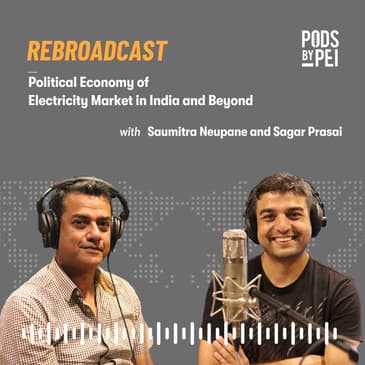
Originally aired on 26 September 2022, in this episode of PxP: Conversations, Saumitra Neupane and Sagar Prasai discuss how the Indian electricity market gets featured in Nepal’s hydropower imagination, the impact that this has had on Nepal’s ability to exploit its hydropower potential, and what differentiates the Nepali model from that of other bilateral arrangements such as those between India and Bhutan.
They also examine India’s policy positions on cross-border electricity trade in the last ten years and how regional rivalry between India and China complicates energy markets in South Asia. They also discuss the future market opportunities for Nepali hydropower and whether there are longer-term trends that support supply signals and investor confidence in Nepali hydropower. They end their conversation by discussing the possibilities of markets beyond India, primarily Bangladesh and China, and evaluate whether realistic opportunities exist on these fronts.
Sagar Prasai is a development professional with over two decades of experience working in water, energy, climate issues, and regional cooperation in South Asia. He is based in Nepal and provides advisory services to various organizations, including The Asia Foundation and the Australian Government’s DFAT. Previously, he served as The Asia Foundation’s country representative in India. He has a Ph.D. from the University of Illinois at Urbana-Champaign.
If you liked the episode, hear more from us through our free newsletter services, PEI Substack: Of Policies and Politics, and click here to support us on Patreon!!
[00:00:00] Welcome and Namaste to this yet another episode of Buds by PEI. I'm Sumitran Yapani, and I'm bringing you fresh take on the recent visit of Indian External Affairs Minister as S. J. Sankers visit and the agreements that have signed in.
[00:00:14] Most prominently, I think the much hype agreement has been the MOU signed between the two governments for Nepal to sell 10,000 megawatts of electricity in the Indian market in the next ten years. For many of you who have been following this conversation on Nepal India Electricity Trade,
[00:00:32] you may recall that a similar expression was forwarded last year during Prime Minister Prasai's visit to New Delhi. So you may ask how this recent agreement differs from the last year.
[00:00:42] Well this is in fact the same agreement. A good way of understanding this is that the idea proposed by Nepal during Prasai's visit last year has now essentially received a stamp of approval from the Ministry of External Affairs India.
[00:00:55] Why this is important? Because the conditions set out by the Indian government on cross water electricity trade, recognizes electricity as a strategic commodity of interest. And hence requires the Ministry of External Affairs India to approve all and any quantity of electricity
[00:01:11] to be traded in the Indian market. Given this norm, the recent agreement can be interpreted as a positive sign of by the Indian establishment to allow the long-term sale of electricity from Nepal.
[00:01:23] This is good news. But this is essentially where we stand. The current agreement does not spell out the specifics of who, how and when this electricity is to be traded. These are matters that we hope will be progressively defined in the days to come.
[00:01:37] Today we are releasing an earlier episode. I recorded with Dr. Sagar Phrasai. This episode touches upon the drivers optimism and challenges of Nepal India power trade. We have other podcasts on the same team which may be of interest
[00:01:51] to those of you who want to explore this conversation in further detail. For today, enjoy this episode and we will see you next time. Thank you and Namaste. Namaste and welcome to Pots by PEI. A policy discussion series brought to you by Policy Entrepreneurs Inc.
[00:02:11] My name is Shriyarana. In today's episode we have some with an impenet, Executive Director of PEI, in conversation with Sagar Prasai. Sagar is a development professional with over two decades of experience working in the areas of water, energy, climate issues and regional cooperation in South Asia.
[00:02:31] He is currently based in Nepal and provides advisory services to very organized sessions, including the Asia Foundation, the Australian Government's D-Fat. And previously he served as the Asia Foundation's Country Representative in India. He has a PhD from the University of Illinois at Urban A Shampain.
[00:02:51] The two discussed how the Indian electricity market gets featured in Nepal's Hyderabad imagination. The impact that this has had on Nepal's ability to exploit this Hyderabad potential and what differentiates the Nepalian model from that of other bilateral arrangements such as those between India and Putan.
[00:03:08] They also examined India's policy positions in the last 10 years on cross-border electricity trade and how regional rivalry between India and China is complicating energy markets in South Asia. They also discussed the future market opportunities for Nepalian Hyderabad and whether there are longer-term trends that support supply signals
[00:03:28] and invest confidence for Nepalian Hyderabad. The end of the conversation with the discussion on the possibilities of markets beyond India, primarily Bangladesh, but also China and evaluate whether there are realistic opportunities on these fronts. We hope you enjoy the conversation. Welcome to the show, Sagar.
[00:03:51] Thank you, Sarmitra. I'm really excited for today's conversation. I want to begin by unpacking the very notion of electricity markets for Nepal. This has been something very significant for Nepal, and maybe it is good for our listeners to understand the relevance of why electricity markets
[00:04:11] is such an integral part of the narrative for Hyderabad development in Nepal. So if you think about how we started to think about developing electricity in Nepal, this was a time when Nepal was predominantly quite poor per capita income around $300.
[00:04:33] And right in front of us was this piece of data where Nepal could potentially generate 83 gigawatts of power. And there were different estimates, but everybody sort of understood that maybe half of that is actually exploitable.
[00:04:47] And so at that time when we were generating perhaps 250 megawatts of power in the 80s, this point of departure was significant. That there was something in the horizon for Nepal's development and it was going to be a Hyderabad.
[00:05:02] Naturally the government of the day also pumped it up, but it was a credible narrative and Nepal is to contow it. So we mentioned this idea of 83,000 megawatts and this has been quite central to our own understanding of Nepal's potential.
[00:05:19] In some sense we've been indoctrinated to this idea. Maybe some have said that 43,000 has been commercially viable. But whatever would be that number if you look back 50 years our own Hyderabad journey and we barely able to harness 3,000 megawatts.
[00:05:33] So does this inability to harness Hyderabad potential in Nepal? How much of that is quite related to our ability to look for markets? What weight does electricity markets carry for Nepal?
[00:05:47] Well you think about the euphoria that the narrative around 83 gigawatts of power came about and how that sort of in some ways captured our imagination. At the same time you think about how we were doing even 12, 13, 14 years ago in 2007, 8 were roughly around 600 megawatts.
[00:06:08] So the journey from 600 to 3000 has been quite exciting and in between that journey is around 2015-16. Nepal is finally relieved of all kinds of load shedding.
[00:06:22] So the excitement, current excitement is around sort of those two issues that you know what the ending, the termination of the load shedding should you all did. And also you know how fast things are coming up in coming in the pipeline.
[00:06:41] So the combination plus you know talk of export potential, the idea that perhaps bungalow this is an exportable market all of this has become very very exciting for the Nepalese population in general but particularly for investors.
[00:06:57] I want to step back a bit. I mean we totally get it that it's been an exciting time with recent developments around Nepal getting entry into India and will come to that in a later sections of conversation.
[00:07:10] But stepping back 1970s I kind of remember and have read about the conversation around things like Gisapani project over 10,000 megawatts and then sub the Koshi sub the Gandhiki.
[00:07:25] There were these large projects that were being discussed and central to this idea was that we would be selling this electricity to India.
[00:07:34] And the understanding on my side is that the failure for Nepal to secure that market was really something that defined our own progress towards building this project.
[00:07:45] For example, Nepal had gone to a point that several hundred engineers were trained for the Gisapani project etc. How do you see these issues? Like what was the central limitation around 1970s, 80s for us not to secure a market for our high-to-power project in India?
[00:08:07] Currently Gisapani at that time was perhaps the largest plant in South Asia. It was to be the largest plant in South Asia.
[00:08:18] And so I think we went a little ahead of our times. To think that we would use instruments like the Kolombo plant and train hundred engineers and bring them back home and then start building the
[00:08:36] Karnalicisapani plant. And then the fact that country where there were absolutely no transmission lines of any capacity apart from transferring 50, 30, 80 megawatts of power. So in that context to have that kind of imagination was in some ways of Ali.
[00:08:59] And to think that Indian Nepal relations would remain steady all along the development of the project and marketing of the project and so on and so forth,
[00:09:09] given that how Nepal politics was impacted by the Koshi agreement with India, the Gunderka agreement with India and so on and so forth.
[00:09:18] If you look at all the parameters whether it is regional bilateral relations, regional peace, the capacity of the two economies to consume that, the capacity of the two countries to build that, I think it was in the Indian Nepal imagination going a mock.
[00:09:38] And so for practical reasons those things couldn't have happened and they didn't. Looking at global examples, we've seen that projects of similar nature quite ahead in time were developed elsewhere around the world. Big projects like the Kolombo or dam etc.
[00:09:58] Do you interpret this failure for Nepal to secure a market in India in around 70s, 80s more driven by the lack of political will or security interests, especially on the Indian side for procuring power from Nepal?
[00:10:16] I am not entirely sure that the Indian side itself is confident that it needed a high-dopower plant of that size. And it could actually consume productively the energy generated from a plant that size. Because India was dotted with coal plants, it was already getting into nuclear.
[00:10:39] There was an internal political economy of coal mines. India had more of a socialist bent at that time.
[00:10:46] Indian industries in manufacturing sector were still struggling. They used to talk about the Hindu rate of growth for instance. The Hindu rate of growth was like, if a grew into a 3 up to 5%.
[00:10:58] And so Indian economy itself wasn't growing in that pace. Their electrification wasn't that actively invested in. And so, given all those things, just like what is happening to Pancheshwar and we can touch upon that later.
[00:11:13] That some projects are just too big to start and too big to operate and end up not being built. This is somewhat related of a question to what you just said, sir. Post-liberalization, you see India quite transformed and its own power needs changed significantly.
[00:11:33] And in this time, we kind of see your shift in the Indian discourse where it's need to secure power is slightly towards the Bhutanese side than the Nepalese side.
[00:11:45] How come Bhutan made that advance faster than Nepal while Nepal had been conversing around electricity markets and India for a very long time? So, the interdependencies between India and Bhutan are at a much deeper level than they operate in Nepal.
[00:12:04] And so, Bhutan was in some ways an illustration case. In the sense that if India could come up with a model that potentially works in a country of that size, perhaps it could work with Nepal as well.
[00:12:22] And what India could potentially get in terms of power security and energy security from Bhutan if India could do the same with Nepal then the scales are different. The levels of benefit from that relationship would have been different.
[00:12:40] So, why I say this is even today the installed capacity in Bhutan is around 2000 megawatts. And the two large projects, the Pina Santu, one and two have been under construction for nearly 14 years in an haven, been built.
[00:13:02] The number of problems in financing, in engineering side and so on and so forth. So even say in another three years time Bhutan might have 4000 megawatts projecting further into the future we could be talking about 8 or 10 thousand megawatts from Bhutan but it will plateau somewhere there.
[00:13:23] Which if you look at in comparison the numbers, India itself has 42 gigawatts 42 thousand megawatts of power, hydropower under construction.
[00:13:35] A lot of them are stalled that's a different story but for a country like India which is on its own accord is building around 42 gigawatts of power to gigawatts isn't anything.
[00:13:46] So, a lot of people talk about Bhutan as being a model. I have a little skeptical of that. It's not quite a model. It is a relationship that is fairly deep in terms of geopolitics, economy and so on and so forth.
[00:14:03] And within that relationship they could develop a relationship where it was possible to develop you know up to perhaps a return gigawatts about down the line.
[00:14:14] So I don't think all of that is applicable in Nepalic case. There was a lot of comparisons made but the basis for comparisons for week.
[00:14:26] I just want to stick around with this question a little bit longer. What I'm trying to understand is you see Nepal and India kind of conversing, large projects based on this long last year treaty and friendship from 1950s close neighbors. The narrative is there.
[00:14:49] But then again when you see India moving towards securing its power needs from neighboring countries, it was not Nepal. It was Bhutan.
[00:14:59] So do you think there was this element of longstanding distrust? You mentioned Koshi, etc. That India kind of felt that now is not the best time to be engaging with Nepal. What was the case?
[00:15:11] Okay, so true that for reasons not quite openly discussed that India had a definite reticence, a hesitation to work as closely in a new way with Nepal as it has done with India.
[00:15:38] There could be variety of reasons. One reason of course that we have to admit is politically Nepal hasn't been very stable for a long long time.
[00:15:48] So there has been in some ways the politics has been characterized by instability for a long time. In the 1990s when democracy came to Nepal and India's trust towards people leading Nepalic politics had all of a sudden taken a leap.
[00:16:07] Even then India and Nepal were not able to come up with significant projects. Of course, Pancas were a project from that era and looked at what Pancas were did to Nepal politics, the major political party got split.
[00:16:24] There was a midterm election called in so on and so forth. So if one project could create that kind of a people, then obviously the attraction for doing more in Nepal would go in down.
[00:16:41] So that must have been the story. Because if you look at India after late 90s, India did grow at a very rapid pace. The energy planners in India got a little concerned about their energy security after around 95 onwards.
[00:17:03] And it was a good time for Nepal to get into that bandwagon as you know, botanical already. In some ways demonstrated that it might be possible and fruitfully possible to collaborate with India and develop hydro power.
[00:17:17] But it didn't happen but also on the side note, you know, 1995 was also the year when the Maoist insurgency started. And so the idea that significantly large Indian projects would be built in remote rural areas of Nepal while the Maoist insurgency was going on was perhaps not practical too.
[00:17:42] So I guess it is the Nepalese politics more than anything else if you're talking after 90s. Before 90s as I mentioned before, it was the Indian economy itself. It was too sluggish to be too ambitious around energy.
[00:17:56] Moving the conversation forward, fast forward to 2014 there was the SAC framework agreement on energy cooperation, a major achievement on non-discriminatory transmissive access for cross body lexit trading followed by the Nepal India power trade agreement.
[00:18:10] And again, you see here that India is quite central to both of these agreements. So what do you say were the key drivers that facilitated in their shift in position in these two agreement?
[00:18:23] Was it merely political in the sense that it coincided with not in the Modi coming to power in 2014 and the Indian government trying to recalibrate its neighborhood policy or what are other considerations at play,
[00:18:37] which made India kind of shift this position towards how it fuse its neighbors in terms of energy? Yeah, so this is one of the questions where I can say all of the above. And yes, true Naran Rambuddhi came to power in 2014.
[00:18:54] He wanted a defined departure from the governments of the past, particularly in relations to India's relationship with the neighborhood.
[00:19:04] And the idea that he would promote neighborhood first, he was also the Prime Minister who invited all these Sark heads of state to his inauguration. There was a lot of hope. And when the Sark summit happened, this optimism was carried to the Sark summit.
[00:19:24] And you imagine from the Indus to Brahma Patro, if we have a grid line, we are talking about 150 gigawatts of hydropower readily within the next 10 to 15 years.
[00:19:39] Now, that kind of grid up in the north would mean that all the intimateity problems that each country is having by entering into renewables would be more or less resolved at least if not for South India but for the rest of the subcontinent.
[00:20:00] And so it was a very glorious moment, I would say that they could at least sign. But like all things, imagine in South Asian relations, the practicality of the geopolitical tensions that forever existed in this region always takes over.
[00:20:18] And so that is what happened immediately after the relationships between after the Uri attacks in Kashmir, the relationships between India and Pakistan,
[00:20:32] and the depth and the talk of the South Asian grid also collapsed. And so, you know, an imagination that big was killed by a minor incident, if you call it minor, but such is the nature of geopolitics in this region that really positive, really big moves can be just cancelled out by tiny events.
[00:20:56] That seems to have kind of projected in this movement towards creating subregional framework, and I think BBIN is a good example of that. How Pakistan was alienated from the South framework agreement on energy cooperation and you see India moving towards more regional controlled area of cooperation.
[00:21:19] Absolutely, and India does have ambitions, global geopolitical ambitions. It just became the fifth largest economy I think last week or so.
[00:21:30] And so, it does want to claim a high seat in the global geopolitics. But it can't do that by leading a region that is perennially squabbling with one another.
[00:21:47] And so, it has to at least show leadership regionally in its own backyard before it can make taller claims. So India does realize this. And so, normalizing relationship having greater regional collaboration, both economic integration and geopolitical sort of balance is important for India.
[00:22:09] And so, while it is now not possible to be very ambitious with Pakistan or even Afghanistan now, I think BBIN is the only game left. Stepping back, so, 2014 I think there was this broad understanding that there is logic for integration for connectivity and power trade.
[00:22:31] And in two years 2016 another important year for regional cross-poter power trade. India came up with a guideline defining what were the norms for power trading in the region. So there was some seminal introductions which included the idea of type-atted agreements that would facilitate broader corporations beyond India.
[00:23:01] But there were significant concerns around some clauses in the 2016 guideline, most notably 5.2 which talked about who could enter into the end of market.
[00:23:13] How do you see this issue around what were the key contentions, what stuck out in 5.2 and what was in it trying to convey to its regional partners?
[00:23:25] So far we've talked about South Asia but there is a looming presence of China in South Asia and that is the root cause of all of these sort of moves by India.
[00:23:35] But let's not forget how it transpired to just before 2016 was 2015 when Nepalese political class managed to write a new constitution for Nepal after almost 10 years of haggling.
[00:23:50] And it wasn't a perfect document for sure but it was a document that could lead Nepal to a transition and end Nepal's political transition and lead it to the next phase.
[00:24:05] Around that time, India for its own internal reasons and arguments decided that it wanted some particular elements in Nepalese constitution. If you look in the newspapers coming out of India around September, time frame, what is Indian Express or others, Indian Express was the one that broke the story.
[00:24:35] Jyashankar who was then the Secretary of Ministry of External Affairs in India now is a minister. He had come to Kathmandu to convince Nepalese leaders that certain clauses needed to be included in the constitution and that time the Nepalese leaders felt that they could ignore the Indian Sussation.
[00:25:00] And what transpired after that was an unofficial blockade of pressure tactic that India adopted and that in very many ways misfired. It ended up raising up rather widespread Indian sentiment for no particular legal reason.
[00:25:26] And there was election, in pending election in Nepalese political timeline and it was perhaps expected that the then Prime Minister K.P. Sharma Ali would do very well because he was the one who actually successfully managed to whip up the Indian Indian sentiment in Nepalese politics.
[00:25:51] And to the cause, it did so happen that the Nepalic Communist Party is one overwhelmingly overwhelmingly and two-thirds of the parliament was one by the Nepalic Communist Party. And there was especially now in India then at that point that Chinese influence in Nepal will grow.
[00:26:22] And so they wanted to curb Chinese engagement with Nepal in every possible sector and Hydropower also happened to be one. And so these clauses essentially say that we are okay by electricity from you as long as it's got nothing to do with China.
[00:26:39] But that has its own problems.
[00:26:42] I think going back to the clause itself it was implied or not implied in sense but clearly stated that 51% had to be from an Indian firm making an investment into Hydropower or it should have been 100% government entity company investing in the Hydropower space.
[00:27:02] Quite conversely you see what is happening on the Nepalic side as there's a lot of private sector engagement. I recall that Bhutan and Nepal work quite focal on this immediately after India released that 2016 guideline.
[00:27:18] Why was it so important these two clauses around entry into the Indian market that both Nepal and Bhutan had to raise their voice against India? Nobody likes monopoly sellers and monopoly buyers.
[00:27:32] And the situation was so turning that in the end it looked from both Temple and Kathmandu that India is orchestrating the entire regulatory platform in such a way that India would end up becoming a monopoly buyer.
[00:27:58] And not only a monopoly buyer but a monopoly investor in these two countries. Now that obviously doesn't sit well with anybody who is also parallel investing in and in Nepal's case is slightly different because there's private sector investment,
[00:28:15] there is government investment and there are other investors that we hope to tap in future. So it would essentially be unfair to all of these investors if we have a system where only Indian investments are welcome and only Indian purchases of Nepalic electricity is welcome.
[00:28:36] So that's not how markets are meant to operate. Just trying to understand this particular event from the relationship between Nepal, Bhutan and India power relations. What was so pivotal that India considered this to be a strong objection and went on to revise this in 2018?
[00:29:02] And we have a history of relations in the subcontinent where India has put a deferred to a lot of things. Why couldn't India put a deferred to this and why did it go on to revise this particular clause in the 2018 iteration of the cross water guidelines?
[00:29:21] So there is an interesting aspect in India-Napala relationship. A lot of people call it very unique for variety of reasons. I call it unique for our mutual inability to remember bad patches in our relationships.
[00:29:37] Because if you think about what happened after the promotion of the constitution and the unofficial blockade and the bittering of the relationship and so on and so forth, now that episode is no longer in any of the backdrops of Indian Nepal negotiations. It has been forgotten.
[00:30:04] If you think similarly and closer when two years ago when Nepal unilaterally claimed a piece of territory in western Nepal, that is under dispute, and included that in the official map of Nepal, obviously the Indian establishment was live it.
[00:30:26] But right now as Indians and Nepal is set down across the table in bilateral talks, that no longer forms the backdrop.
[00:30:35] And so Indian Nepal relations are unique and variety of ways but in my mind it's unique in the sense that we very easily forget the bad patches in our relationship. And it's a good thing.
[00:30:47] And that is why when surplus electricity was becoming a problem in Nepal, there was a lot of peace in India and India sort of agreed and in the end how much did it agree to around 350 megawatts, which is nothing for India.
[00:31:07] So it's just a very narrow north Indian UP, behind grid-intermittency problem that gets resolved through 350 megawatts. If it wants to go anything higher we should be talking in terms of at least 2,000 megawatts.
[00:31:28] So it wasn't a very big concession for India to relaint and it hasn't been very generous either. It is still objecting to the upper Tamakosi, you know, 465 megawatts planned because Chinese contractors built them.
[00:31:50] Now the problem with this is these have to go through global tenders and you have to give it to the lowest bidder, you know, provided in all things remaining equal.
[00:32:02] And so you know, Chinese tend to win a lot of contracts not only in Nepal but also in India.
[00:32:09] So because of that, if the Indian position is if there is an engagement of a Chinese contractor we can't buy from that plant that is also not sustainable over time it'll crumble soon.
[00:32:22] So you mentioned an interesting point and probably we'll get to it on Tamakosi and what's happening at the moment on the cross-porter front.
[00:32:31] But going back to the 2018 guidelines that kind of been formalized and in this issued its regulation, the central electricity authority has come up with his own regulations around entry and approval.
[00:32:46] So the reason for this is that the government's legal decision is that they have a good idea of the new policies on the Indian side.
[00:32:55] While they seem to kind of not spell out clearly the area of objections that put on and Nepal had in the 2016 guidelines but the nuts and bolts of the operational part of these frameworks still reflect the concerns of India around China's.
[00:33:43] So if you looked at it from the Indian sort of perspective, absurd as the position might appear, it is doing what it is meant to do, which is to hassle Chinese investors to a point where they can't be significant players in Nepal.
[00:34:05] And that is what the clauses are intended to do and they're doing precisely that. If you think about as there may be any significant Chinese investor companies coming to Nepal and talking about producing electricity in Nepal, at this point no, they're unknown.
[00:34:24] And so from the Indian point of view, I am sure there are a little embarrassed by saying that India will be able to tag every electron and import it China free into India. Absurd it surely is but it is doing the trick.
[00:34:45] And Nepal and Bhutan seem to have no objections on the revisions, despite the logic remaining the same and the premise remaining the same. Is that a fair estimate?
[00:34:57] It's a fair estimate in the sense that both countries know that sooner or later these absurdities will have to go away. And it has to the grid has to operate more like a market.
[00:35:13] But at the same time, given enough time, India will come to a position where the markets, at least for Nepal and Bhutan, will begin to operate as intended to the benefit of the two countries.
[00:35:34] So, you know, if you talk to some of the negotiators from the Nepalese side for instance, their point of view is well it will take time but in their will to the right thing eventually.
[00:35:48] I'm Shira Rana, this is Spots by PEI. We'll hear more from our guests right after this. Welcome back to Spots by PEI. I'm Shira Rana, let's get back to the show.
[00:36:12] Moving the conversation forward, Sagar. I think we also need to discuss how the Indian logic has and will continue to drive cross-border electricity trade opportunities and challenges for Nepal.
[00:36:26] And you mentioned some of the current state affairs in the area of India, allowing around 365 megawatts of power to be traded where the proposal it had put in was for around 1000 megawatts.
[00:36:39] Clearly demonstrating that India is taking a peace-meal approach and selective approach to entry into the Indian market. And you also mentioned key projects such as the 465 apathama kochi, not being able to enter into the market on the Indian side because of Chinese footprints.
[00:36:59] In your 2018 research report, you noted, quote, logic of grid integration is not market oriented. It is operationally too fragmented to emit reliable long-term supply signals for hydropower investors in the Himalayas.
[00:37:17] Given the current state affairs on this peace-meal approval from the Indian side, do you still hold to your 2018 opinion around markets and opportunities or are there other long-term or short-term trends that are influencing Nepal's own opportunities to enter into the Indian market?
[00:37:40] Let me take it this way. So, the grid is still fragmented and it's actually quite difficult to have a seamless grid, unburdened by all kinds of regulations, particularly when it's a transbound grid.
[00:37:53] One does anticipate some degree of regulation, some degree of controls because these are sovereign systems trying to meet one another at certain point.
[00:38:04] But then that doesn't mean that Indian Nepal cannot do it because there are other examples in Europe and Africa and elsewhere where these things have been very successfully tried out and they work.
[00:38:15] The current position that India has over primarily to exclude Chinese investments in South Asia, that you tag every plant, every source of electricity and then only trade is actually has become a burden for Indian markets themselves.
[00:38:32] Not so much of a burden today because the scales are very small around 2000 plus megawatt from Bhutan and around 300 megawatt from Nepal is not going to make that much of a dent to India, but India's own energy security is going through an appeal.
[00:38:49] And that is largely because of coal prices and supply chain disruptions and so on and so forth. That the pandemic brought about. What the pandemic also did was open the eyes of the Indian energy planners saying that you've got energy in a round year neighborhood,
[00:39:04] you need to tap that instead of depending on some Australian coal and Indonesian coal and so on and so forth. Plus, the noise around climate change and the demand for faster action on climate change puts India under greater integrative pressure every year because it's reliance on coal is not just letting up.
[00:39:28] And so it wants to be a good respectable player in the climate table, it has to do more on the climate side too. So it has to start doing something about its coal.
[00:39:39] What it did was invested heavily on renewables but renewables introduced the kind of intimacy in the grid that for these countries only hydroparken make up. It's not time yet to rely on batteries particularly when you're talking about 200 gigawatts of supply lines that India has.
[00:40:03] And it is also not possible to get into gas fired plants because India doesn't have that much natural gas and if it does get in natural gas again, it has to depend on Russia or somebody else.
[00:40:16] So I think there is a massive shift in the way Indian energy planners are thinking about hydroparken. And part of that story is their renewed interest in Nepaliy hydroparken.
[00:40:30] And that is why I earlier on also I was arguing that sooner or later India will relent and lean more towards market trade than this you know heavily geopolitically colored system.
[00:40:46] Where you know every plant is to be tagged, every electron is to be tagged as towards source of funds are.
[00:40:53] You know so this is not quite practical and I think we will see a more liberalized grid system in near future I would say and I don't ask me in the number of years but near future is all like else.
[00:41:09] That's the optimism most Nepaliy hydroparken investors would want to year but trying to understand this very clearly. So the economic logic of why trade should happen within India as you mentioned, renewable climate change, etc is clear and visible.
[00:41:30] But then again there is a particular constituency of interest among the hydrispays and policy makers in Nepal.
[00:41:39] That remain a bit hesitant with India's peace-mail approach and they tend to believe that this whole selective approval into the Indian market does not provide a stable signaling for investments in Nepaliy hydroparken.
[00:41:59] And you kind of place this within how scholars and thinkers in India seem to believe for example I read somewhere that Moander Lama in one of his 2020 research reports that Nepal would be the biggest beneficiary of cross border electricity trade.
[00:42:17] The logic is there very clearly but then again this selective process how do we build that confidence on the Nepaliy policy makers and investors side. So there's a lag time. There's a lag time between a change of strategic thinking and implementing that strategic thinking, right?
[00:42:40] So India currently has an appearance of an extremely conservative, extremely selective kind of an import sort of ecosystem. But if you think about what its own economic compulsions are it can't sustain this position for too long.
[00:43:03] And perhaps Professor Lama was projecting things way into the future and say India has nowhere to go with this position. So it has to at some point adopt a more liberal posture in at least in terms of regulating grades.
[00:43:26] At the same time, you know, is it emitting the right signals to Nepaliy's no right? I mean if you think about sort of Nepaliy enthusiasm for electricity development, hydropark development.
[00:43:42] It sort of platos around 200 to 300 megawatts. It doesn't go beyond that. And in some ways, when there are multiple 200 to 300 megawatts plans, you're not thinking about large export, you know, scales at an individual level.
[00:44:02] Every every investor is producing 200 megawatts isn't thinking about large sort of export market. But somebody in Nepal is to think of a large export market and that happens to be, you know, Nepaliy electricity authority at this point.
[00:44:17] And incidentally, just like Nepal and Bhutan protesting with India that you can't be a monopoly buyer of this sort. Currently, the independent power producers are telling the same thing to Nepaliy electricity authority that you've gone a mock here an autocratic monopoly buyer.
[00:44:41] And so these are trade negotiations. They will take their course. But in the end, the choice to deviate from the market always becomes expensive and you will have to return to market.
[00:44:56] I'm thinking our export arrangements with India will have to turn more towards market and our own internal arrangements of these sort of static PPAs will have to change too.
[00:45:09] So that is for the future. Currently, you're right. It's not emitting good signals and therefore, you know, hydropower investment in Nepal is morally stalled.
[00:45:19] If you look at what is happening to the global interest rates and interest rates in Nepal, at this point nobody wants to invest in power. Now what will happen if there is this this highest increases is we will again see a gap.
[00:45:34] You know, both in terms of our ability to meet domestic demands and also if there is any export commitment to meet export commitment. So this is a rough patch in which the entire world is sort of struggling to take a call on investments.
[00:45:52] And Nepaliy investors are also doing that. Just as you were answering the question, I had a tangential thought and this was around India's own hydropark capacity. So like Nepal, there's several thousand megawatts that India is already produced.
[00:46:10] As India is looking towards its neighbor to secure its hydropark needs moving forward, but there is ample amount of hydropower also available on the Indian side.
[00:46:22] What do you think is the logic around how India should move forward with their own hydropower? And how does that correspond with terms of in terms of efficiency and cost around procuring power from Bhutan or Nepal?
[00:46:39] I've heard in policy corners that Nepaliy hydropark is quite expensive compared to that built by Bhutan or on even in the Indian side. And I would imagine that that defines prospect and profitability around power trade.
[00:47:00] It does. Just let me start with the small correction. I mean Bhutan is power is built through concessional loans, obviously it will be cheaper and Nepaliy power is mostly built through commercial loan. And so it is slightly more expensive and that is how it will be.
[00:47:18] But over longer term, these things will normalize. You know some that I served in India for four years and in my four years, I used to frequently bounce upon these sort of meetings and interlocutors who used to tell me that Nepal missed the bus, missed the bus in the sense that Nepal did not agree with the Indian proposition of developing
[00:47:47] the way power is being developed between India and Bhutan. And now India has its own power base where it no longer leads Nepaliy power.
[00:47:57] So that was that was the quick that I would get from most of the Indian interlocutors, right? Now it looks like India has missed the bus. And it has missed the bus because between around 2004 to 2018-20 India stopped paying attention to its hydropower development.
[00:48:21] So around 40 gigawatts of power in India, most of it in the Northeast and some of it in Himanshul and Uttarakhand, were stalled because of financing reasons, cost escalations, engineering failures and so on and so forth.
[00:48:36] But the Indian government was completely reluctant to revive these projects through re-negotiated finances. And so while it ignored for those many years, the energy planners in India were completely confident that they will have enough renewables.
[00:48:54] They will have other ways of managing the intimidancies and so on and so forth. Cole was becoming cheaper in cheaper in cheaper and so forth, across the world because a lot of the cold-fired power grants were being disengaged and decommissioned elsewhere.
[00:49:08] And so this kind of a false sense that India can manage without hydropower or significant investment in hydropower. And so that's what happened, they realized that they've missed the bus.
[00:49:23] And so now you can't pump in enough money to revive all of these projects and so on and so for some of these things have the cost escalation and the time period has gone to a point where even if you build these plants, they won't be profitable plants.
[00:49:38] We have one example of this in Apartama, Kozita, Apartama, Kozita is not likely to be profitable for a very long time because of cost escalations.
[00:49:47] So those realities are now surrounding Indian hydropower development and that is why the openness to go out and build more and including in Nepal. So they signed around 2000 megawatts recently around that logic.
[00:50:04] I want to engage you on another tangential but a related thought and this being on the idea of hydropower and its impact. So entire of South Asian Nepal and more so on the Indian side, hydropower has been really contested for environmental and social reasons.
[00:50:25] Large movements particularly in India that I've installed hydropower processes and we've had some on the Nepal side as well.
[00:50:33] How much of the Indian logic is captured by the fact that India wants to export some of the externalities of building large hydropower or hydropower in general to its neighbor and kind of reduce that on its own home front.
[00:50:52] If it was completely market-based trading, you could say that. What is happening with Indian investment is the Indian companies which are investing.
[00:51:06] Now there are negative externalities in hydropower agreed and Nepal will have to bear with it and India takes out electricity off a grid without any environmental damage that is also true. But at the same time one has to understand the scales of these problems.
[00:51:31] Now in the field of energy for instance UK and Boris Johnson in his last speech to UK citizens said we will build four nuclear plants, you know, one every year.
[00:51:48] Now what does that mean that how come Europe is all of a sudden you know, fine with nuclear energy now right because you don't have choices.
[00:51:57] Because you can't be fossil faced based all the time, you need a base energy and that base energy has to come from source some source that is climate friendly, right? And doesn't create that kind of an environmental rockers where it becomes politically unimpossible to push, right?
[00:52:20] So if you look at all of those things the impact of an up-of-a-hide-of-hour plant, particularly the peaking type and the runoff river type is really nothing, you know, it's very minimal.
[00:52:34] There are issues around storage types, but you have to bear with it when you compare with the environmental damages other systems cause, right? Or the viability of other systems like wind and solar.
[00:52:47] So the broader conclusion is one we are the other, we have to come back to hydropower. And remember that currently pumped hydro is around 1.5 to 2 times more expensive for a unit, right? Compared to, you know, regular, you know, runoff river or other hydros systems.
[00:53:12] But people are even opting to go for pumped hydro because you need something to manage the intimacy and it can't be fossil fuel. So, you know, sooner or later these things will, you know, market has a way of finding, you know, equilibrium.
[00:53:30] And there will be an equilibrium found even in terms of the potential environmental damage and potential benefits to society.
[00:53:40] You have been listening to parts by PEI, I'm Shia Rana and this is a quick reminder for you to do as a favor by sharing the podcast on your social media and leaving a review on Spotify, Apple Podcasts and Google Podcasts, or wherever you listen to the episode.
[00:53:56] More from our guests when we return. Welcome back to Parts by PEI. I'm Shia Rana, let's get back to the show. I was having this conversation with Satis in my previous episode. And then we were discussing that the market signals are quite clear that India needs picking response.
[00:54:28] It needs energy to cater to a demand that is quite high during the evenings or during the peak hours of the morning.
[00:54:37] And storage projects are well adapted to do that and that Nepal's opportunities in the Indian market would be really defined by its capability to build storage projects and supply power to India. Do you agree? I agree in I disagree at the same time. That means I'm torn.
[00:55:00] What is happening is Nepal shouldn't just because we can sell power at a higher cost, go overwhelmingly into storage type. Because storage type in this geography, at a time when there are glacier lakes outbursts and things like that.
[00:55:20] These extreme events are becoming more and more frequent. So we need to be wary of too many storage types. We need enough storage type to ensure a base power for domestic consumption.
[00:55:32] And we need enough storage type to have a credible amount that is exportable from Nepal, as in credible when I say credible, credible in negotiations reliable in operations.
[00:55:47] So we need enough to negotiate a good base power price. And for that, we need to show a good storage pipeline. But at the same time, we shouldn't just throw our weight around storage just because it earns more. It is quite a risky proposition.
[00:56:06] Really, it will be April 2022. Nepal and India signed a flexible agreement as you may say on energy cooperation kind of saying that energy especially hydro power is going to be the cornerstone for an Nepal India partnership moving forward.
[00:56:26] And since then, you see a flurry of movement of Indian companies showing interest into the Nepal-Ehyderop power. Notably, NHPC has entry into the much-lingered, west city, hydropower project, city-reverse 6, both combined capacity of 200 megawatts.
[00:56:49] And this on top of around 2000 megawatts that Indian companies already hold in Nepal for export purposes to India. What does this say about the model, the future model of hydropower development in Nepal?
[00:57:04] Is this a spin-off of the British, you had a critique on the British model but this almost seems like a speed up of the British model. How are we to understand what is going to be the direction for Nepal-Ehyderop power because it wants to sell power to India?
[00:57:23] Look, if we are to sell a whole lot of electricity to India and when I say a whole lot, future potential may be 8-10 gigawatts. If we are thinking in that scale, we have to allow the Indians to take peace of the by.
[00:57:40] Because they're not going to get into this game if their investors, their investments are not going to be welcomed here. So we have to do that. And each project takes 7-8, sometimes 10 years to build. And so at this point if we're talking 3 or 4,000 megawatts, it's fine.
[00:58:04] In fact, if they were to go to 6 or 8 also I wouldn't be worried because if we are selling overwhelmingly to them, we have to ourselves be, you know, circumspect enough, wise enough to say, okay, you can enjoy some of the benefits of this yourselves.
[00:58:23] That is a good incentive for the market to flourish. That I don't have a problem with but the two models that we're talking about what is happening in Nepal right now and what has happened in Bhutan are slightly different.
[00:58:40] The difference in the sense that Nepal is Bhutan plus. That Indian investments of a particular kind will be treated just the way, you know, Bhutan and treated Indian investments in India.
[00:58:53] But we also are open. I mean, we're open if Korean companies come and build. We have already agreed to that with at least one Korean company or any other company in Japanese or anybody in Japanese.
[00:59:05] Except for Chinese is an Indian position and by the same token, Chinese if they want peace of the pie here they need to buy some of the power. Will they do that? They haven't shown any commitment to that so they need to do that too.
[00:59:20] To make markets fair particularly across borders all parties have to give some compensation. If China is to buy let's suppose even 500 megawatt from Nepal and produce 2,000 to 2500 is not a problem.
[00:59:35] But China can't just build here, sell to India, make profit in Nepal, you know, leave all the environmental damage in Nepal and walk free without importing a single megawatt of power. So this is how you know, typically I think they've, they've understood the signaling from the market.
[00:59:55] Hence the exit from West City, the three watches company exiting from West City. Yeah absolutely and to that extent if you're a buyer you should be allowed to produce. So to understand this better, so the Nepal space is not just government building, high-to-path projects.
[01:00:18] But on over 20,000 megawatt that's already been licensed to Nepal, independent power producers. We're looking for markets signals, playing the waiting game to see if there's going to be markets where they can sell to India.
[01:00:33] What effect does the current scheme of things have on this 20,000 megawatt that's possibly can come up in the future? See, like I said we have to go to the first question. What we talked about this all euphoria around hydropower development, right?
[01:00:54] And so there is such an excitement that you know, I would say, you know, there are I think eight lakh investors in the stock market and all eight lakhs of them have some investment in hydropower and that eight lakh households, right?
[01:01:13] I'm going to talk about close to 40 lakh people. And so, your 40 lakh Nepal is at in some ways already invested. Let's not worry about how invested but they're already invested in hydropower.
[01:01:28] So there is this widespread excitement and widespread excitement sometimes creates, you know, this kind of false signaling. And you know, 20,000 megawatt's being built solely on Nepalic capacity is possible but solely on Nepalic finances and Nepali banks and Nepali leverages and things like that sounds unrealistic.
[01:01:51] Because there are, I'd about demand also go to doesn't grow that fast, the export markets are have their own vagaries and uncertainties and banks don't typically like that.
[01:02:03] So if it was entirely a domestic demand and domestic story, perhaps 20,000 was not an issue but it is not just a domestic story for us now at this point.
[01:02:14] And even if we grow, you have to remember that the world is becoming more efficient in terms of electricity use, right?
[01:02:22] And if you look at the average bulb today and average bulb 20 years ago, there is a big difference between power consumption even in how we light our homes. And so to think that we will have 20,000 megawatt's consumed in this country alone at this point I don't see how.
[01:02:42] Let me give you your comparison. So the national capital region in India which sort of includes Delhi and Gurgaon and places like that, that has a population of roughly 25 million. The power demand there is around 8,000 megawatt's.
[01:03:01] Now that's a place where it is much hotter than Nepal for more months and it is called for a month or two. And so the air conditioning runs many more months in India compared to Nepal, right?
[01:03:16] If you think about that there are electric systems, metros, there are train systems running on electricity in that area and there's still around 8,000 megawatt's. And so for us to get to that level also it'll take tens of years. I would think, right?
[01:03:32] So I won't say that there is potential for consumption of 10,000 megawatt's, right? But we have a long way to get there.
[01:03:42] But the Indian market if it is to open as on the principles of market then there is potential for that 20,000 to be built and be exported to India.
[01:03:54] With time, because I have a feeling that as by in the next 10 years for instance it would be completely indefensible if India continues to produce 50% of its power from coal.
[01:04:14] I mean think about the urgency of climate change today as we are preparing for COP27 and think about COP37 which country will be able to stand up and say, you know, 50% of my power generation is through coal and I'm a big climate player.
[01:04:36] You know, I want to lead this fight so that doesn't become credible. So India will have to decommission a lot which means it will have to take power from the neighborhood.
[01:04:49] Trying to bring a sense of realism into this conversation around 20,000 megawatt's held by IPPs and the China factor that you mentioned. So while there have been some projects, Chinese projects that have existed Nepal but China still has a very large footprint in the Nepalian Idris space.
[01:05:11] And in India seems to be averse to all of this looking at the Tamagoshi case. How big an impact do you think this is going to have for our future moving forward?
[01:05:32] I would imagine it's not just the Nepalic government that will build projects and sell to India much of that has to come through the IPPs also. But that factor of Chinese footprints being very heavy on the IPP side, beat machinery as I mentioned in a sector sector.
[01:05:50] So what do you think are the consequences and implications as you see it now?
[01:05:55] See my sense is it's very difficult to beat the Chinese contractors at price or at capabilities because they built their own country in this fashion right and so they've got a lot of experience, they've got a lot of capacity.
[01:06:10] And they've got a lot of geopolitical backing to their contractors. So I don't see why Nepalies should stop using Chinese contractors, but Chinese investment might begin to slow down because of the position in India has taken.
[01:06:38] And if that happens then some other investment will have to fill in. And for the next say six to eight thousand Megawatts perhaps if it happens slowly then Nepalian investments can stretch that far.
[01:06:57] But if we're thinking beyond that in the next 10 to 15 years then we'll have to think of some international investments already. And we have to think about profit group, attrition systems, hedging in so on and so forth.
[01:07:13] The government has just barely begun to scratch the surface on these issues but we also need to diversify investments. We can't have just Chinese investments here. Absolutely. I mean my take on this is that the market signal from India is quite clear.
[01:07:28] And the point of thought being that does Nepal need to formulate a strategic position in the energy space that it says no we're not going to bring in Chinese investments.
[01:07:41] We're not going to bring in Chinese contractors or we are not going to bring in Chinese machinery because we clearly don't want to see your reputation of the Tamagoshi case moving forward.
[01:07:52] We don't want to build another 700 megawatt project done by the Chinese contractors and then Indian saying that no because we don't want to allow you've got a Chinese footprint in your project.
[01:08:03] I know that it's difficult for the Nepalic government to clearly spell that out but as a strategic position that is not spelled out,
[01:08:12] maybe that idea of diversification that language can come but do you see Nepal at this moment in time that it needs to have a strategic position of some sort?
[01:08:23] I think if you want a last word from me on this issue, the way I would say is that the Indian urgency in terms of fulfilling their power demands, particularly their intimateities coming out of their massive investment in renewables, will supersede any other consideration,
[01:08:43] including this silly point around Chinese contractors because you know a country's emergency is a country's emergency and these little geopolitical games get submerged very easily.
[01:08:54] And so my sense is if the situation encoled, Ukraine war continues for another year, year and a half, all of these restrictions will come down. So this has been an excellent conversation and I want to end this by kind of talking about exploring markets beyond India.
[01:09:14] I know India has been central movement on the Bangladesh, if front, there's been quite optimistic, especially with upper current and the Bangladesh government negotiations.
[01:09:26] And they've been talks around selling power to India. You mentioned that if China is to put a position in the hydrospeak in Nepal, it has to buy power as well. What is the opportunity of really realistic opportunities and what time or reason may they kind of be materialized?
[01:09:45] See, interestingly the practicality of Nepal exporting to Bangladesh comes to Nepal, I mean the precedence for that kind of arrangement comes to Nepal almost for free.
[01:09:59] In the sense that there is an investor from India currently trying to build upper currently. And you know if India refuses to allow this particular investor, which is GMR,
[01:10:15] to export its power through India to Bangladesh, for instance, then we'll have a live case where this problem has sort of resurfaced. Now if India allows it, then we have a precedence where it has happened from Nepal territory, electricity has been transmitted through India to Bangladesh.
[01:10:35] So in the sense we've got a good pawn in the system and incidentally it's an Indian investor. So Nepal is quite a loop in a loop manner looking at how India treats its own investors.
[01:10:53] If India fails to provide any evacuation plan for a carnali, then we'll see what if this was not a pawn and it was a knight.
[01:11:07] For example, what if NHPC was coming to invest in Nepal to export to Bangladesh? That would have been a different story. That would have been a different story. But the precedence is a precedence.
[01:11:18] There is a evacuation plan also has to come out of Nepal, go into India and on to Bangladesh. Now once this system is set up, you can't say I want to put more electron on the system. It's not possible.
[01:11:33] What about on the China front? Is it realistic opportunity that Nepal may tomorrow someday sell electricity to China? Perhaps not. If you look at China, a lot of people look at the Chinese prosperity and project on different kinds of potential power exports in areas.
[01:11:51] But China is prosperous in the East and the South. China is not prosperous where it borders us. So China, what we actually border with is rocks and monasteries. We don't even border with any significant economy of China.
[01:12:08] So before we travel upwards of 1500 kilometers, there's no significant power consumption from our northern border into China or in Chinese cities there. These are not even cities. They are largely a little hamlet, except for Laza. So the story of the day is look south.
[01:12:30] We have to because north is just mountains and rocks and stuff like that. We can't transmit electricity, 16, 1700 miles. Excellent. Thank you so much, Saga, for your time. It's been an excellent conversation. It was great having you on the show. Thank you, Samaithra. I thoroughly enjoyed.
[01:12:53] Thanks for listening to Parts by PI. I hope you enjoyed today's conversation between Samaithra and Saga on the political economy of Nepal's electricity market in India and beyond. Today's episode is part of PI series on the past, the present and the future of Nepal's energy sector.
[01:13:10] It was produced by Nijan Rai with support from Sara Blama, Upper Na powder and Kuchi Hang. The episode was recorded at Mince Studio and edited by Sara Blama. Our theme music is courtesy of Sanjay Shrashra from 1904-80.
[01:13:25] If you liked today's episode, please subscribe to our podcast to be informed about our latest episodes. Also, you could do us a favor by sharing the podcast on your social media and by leaving us a review on Spotify, Apple Podcast, Google Podcast, wherever you listen to the episode.
[01:13:42] To catch the latest from us on a pulse policy and politics, please follow us on Twitter at tweet to PI that's tweet followed by the number 2 and to PI.
[01:13:53] You can also follow us on Facebook at Policy Entrepreneurs Inc or visit our website www.pi.center to learn more about our work. Thanks once again from Mishirana. We'll see you soon in our next episode.