
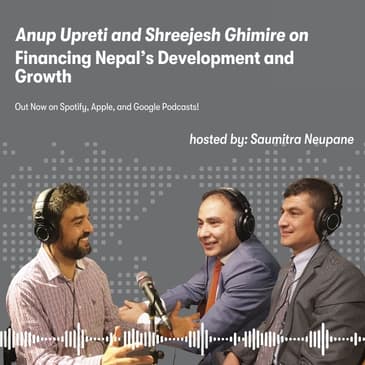
There prevail challenges to financing Nepal's development and growth in the midst of its limited sources of funding available. In this current climate of limited funding, foreign aid, foreign direct investment, and domestic resources have played a crucial role to sustain Nepal’s economy. Nepal has received financial assistance from several countries, including the US, Japan, and the UK, as well as international multilateral organizations like the World Bank and Asian Development Bank. The government has also implemented policies to attract foreign investment, particularly in hydropower, tourism, and manufacturing sectors. Additionally, Nepal has been focusing on increasing tax revenues and promoting entrepreneurship and small and medium enterprises to boost economic growth. However, there is a need for better coordination and monitoring of the use of funds, as well as a focus on creating an enabling environment for private sector investment to sustain growth and development in the long term.
In this episode, the second of a two-part series, PEI Executive Director Saumitra Neupane sits down with two guests, Anup Upreti and Shreejesh Ghimire to discuss the lessons from successful and not-so-successful experiences of infrastructure project financing in Nepal, and outline policy priorities for building an enabling environment for future investment mobilization in the country.
Anup is a legal expert who regularly advises clients on diverse transactional matters ranging from foreign investment and project finance to private equity. He is the Managing Partner of Pioneer Law Associates and specializes in financial laws, foreign investment, private equity, and capital markets. He holds a Banking and Financial Law degree from the Queen Mary University of London, U.K. Similarly, Shreejesh is the Chief Investment Officer at NMB Bank Ltd. and was formerly the CEO of NMB Capital Limited. He is an MBA graduate from Kathmandu University School of Management, specializing in Finance, Marketing. He also holds a BMCC from Pune University, India.
This episode has been partly funded by the generous contribution of VRock & Company.
Click here https://patreon.com/podsbypei to support us on Patreon!!
[00:00:05] - [Speaker 0]
Namaste and welcome to PODS by PEI, a policy discussion series brought to you by Policy Entrepreneurs Inc. My name is Tedon Konsakar. In the next episode, the second of a two part series, Soumitir Nupani, executive director of PEI, sits with two guests, Anupu Preethi and Sreejesh Kimire to discuss the lessons from successful and not so successful experiences of infrastructure project financing in Nepal and outline policy priorities for building an enabling environment for future investment mobilization in the country. Anup is a legal expert who regularly advises clients on diverse transactional matters ranging from foreign investment and project finance to private equity. He is the managing partner of Pioneer Law Associates and specializes in financial laws, foreign investment, private equity, and capital markets.
[00:00:57] - [Speaker 0]
He holds an LLM degree in banking and financial laws from the Queen Mary University of London. Similarly, Sridesh is the chief investment officer at NMB Bank Limited and was formerly the CEO of NMB Capital Limited. Srijesh is an MBA graduate from Kathmandu University School of Management with a specialization in finance marketing. We hope you enjoy the conversation.
[00:01:24] - [Speaker 1]
Welcome to another brand new episode of Pods by PEI. This is my second of my two part conversation with Anup and Sujes. If you haven't listened to the first part, I would request you to all listen to it. Now, welcome back, Anup and Welcome, guys.
[00:01:37] - [Speaker 2]
Thank you.
[00:01:38] - [Speaker 3]
Thank you.
[00:01:38] - [Speaker 1]
For the next part, I want to engage you both on very sector specific discussions. Alright? So the idea is to kind of reference what has been happening in Nepal with regards to project financing, successful cases and unsuccessful cases in different sectors, to make observations on what has worked, what have been the critical issues and where have been our really touch points when regards to project financing in Nepal. And it is only fair that we begin this discussion with all of our favorite topic, hydropower. Right?
[00:02:13] - [Speaker 1]
This has been a sector that is very aspirational on the Nepali development and growth story. And then it is also a sector, despite several constraints and challenges therein, but this is a sector we've seen a very diverse flow of investments. Right? So let's begin the conversation with hydropower. And the first thing that I really wanna point out to start up the conversation is going back in nineteen nineties, foreign investment, two specific projects, Bodhi Koshi and Kimti.
[00:02:46] - [Speaker 2]
So late nineties, project financing was done purely private led financing. That was, I think, first privately financed projects in
[00:02:56] - [Speaker 1]
the foreign.
[00:02:57] - [Speaker 2]
Both equity and debt also foreign. And what is the controversy now? Or few years back, I think with those projects, two aspects. One, this was dollar PPA.
[00:03:09] - [Speaker 1]
Anup, just on on on this, I mean, the concern with dollar PPAs was that the dollars were escalating and then that led to more financial losses. Right? Yes.
[00:03:18] - [Speaker 2]
At the time when the PPA was signed dollar as what at one rate, and then it changed to a very different level, and that created more obligation for NA when you talk from NPR perspective because NE was earning money in rupees. So at one time, entire blame of NE's financial situation was put on both of these projects. There was parliamentary hearing. These projects were called into parliament and asked why the current
[00:03:48] - [Speaker 1]
The utilities suffering losses.
[00:03:50] - [Speaker 2]
Losses and why the PPA price should not be changed. The lesson from there is one big factor was, will Nepal really open up a contract after signing it? I think that's a really big message. You know? Is Nepal really willing to honor the contracts that they have signed?
[00:04:11] - [Speaker 2]
Now if it was poorly negotiated or we need to look at from the perspective of these projects were correct at that particular time. If PPA of that nature was not signed, probably they would not be able to raise the financing. So, you know, we tend to forget in what context, at what situation, finance or closure was done, how what kind of agreements we've signed with the investors.
[00:04:36] - [Speaker 1]
Interesting that you mentioned, this point around there was a really point of departure where, sitting now, we're thinking whether whether at that point in time, Nepal would honor the contract. From there, today, we've moved into a process that requires really stringent contract management process. Right? And then really wanting things to be written out. So has that contract management process really evolved?
[00:05:01] - [Speaker 1]
And is there confidence that that contract today is gonna be more honored?
[00:05:05] - [Speaker 2]
I think so. I think so. It's just, in those projects, nothing has happened enough that since not honoring the contract. While that might be in the back of the mind, the NE has not bridged their contract, so that's really good.
[00:05:18] - [Speaker 1]
What about what this translates to interest for new developers coming in, especially money coming in from outside and wanting, similar preferences for dollar treatments for the rates in ITO?
[00:05:32] - [Speaker 2]
The Nepalese commercial arrangement on PPAs have really evolved. Today, if somebody is expecting, PPAs like Kimte and Botikosi, that's not gonna happen. And rightly so because Nepalese hydropower development is at a very different level as compared to when Kimthian Portikosi were negotiated. While at that time, we had to give certain assurances to foreign investors, now market is more mature, you know, foreign investors understand. That's one thing.
[00:06:00] - [Speaker 2]
And now, the few things from an investor's perspective, expectations. Right? So the most recent, most bankable project Nepal has signed this opportunity. Lot of DFIs are lending in that projects. Government has signed a consistent agreement, which say it's a really bankable document.
[00:06:21] - [Speaker 2]
Now the issue is government has not extended same kind of bankability to to other projects. So I think, you know, from a policy perspective, to sit down and understand and discuss, okay, this is the risk allocation in our concession agreement, and government side will do this, and let's continue that arrangement for next ten years, for example. Because when investors are looking at, they all are going to look at a potentially project development agreement, and that, you know, expectation management, probably we should still do to give confidence in this sector.
[00:06:58] - [Speaker 1]
Let me get this straight. Like, are you what you're saying is that for somebody coming into the sector, they should not be expecting some level of treatment that a project has got. Right?
[00:07:10] - [Speaker 2]
Not in all respects. Not in all respect, but fundamental respects. Let's say, what is the role of government to guarantees NES default, for example. Right? I think Nepal needs to move away from DFI's financing to more real commercial finance.
[00:07:28] - [Speaker 2]
When that happens, if change in law protection, any payment guarantees, how are you going to deal with hazing, in a force majeure, you know, how are you going to allocate hydrology risk, for example? Those kind of risk probably should be consistent because we are giving a message to foreign investors saying that our concession agreement would look like this with this risk allocation for next ten years. I think that's very important. Rather than we having to negotiate with the government, already set a point now and again, and advising the clients, for example, hey. I mean, this is the template of last document, last transaction, but this may not be continued for you.
[00:08:10] - [Speaker 2]
That's not really a nice way to look at, you know, infrastructure financing.
[00:08:15] - [Speaker 1]
To just on this conversation, I mean, so the 1992 act, Electricity Act, was really important for mobilizing the domestic private sector. Right? And that was really timed with the liberalization process, the banking sector coming in. And today, the Nepali banking sector is quite heavily invested. There is a requirement, I believe, right, from from the central bank that at least some amount of funding is going to the deprived center, including hydropower.
[00:08:43] - [Speaker 1]
And your bank, I think, is leading that process among other banks. As we are on this process of talking about bankability, enforcement, especially with international financial institutions or financial investors, how does this translate to how the domestic financing sector looks at this issue?
[00:09:04] - [Speaker 3]
See, for domestic financing, relatively, the policy consistency is is easier in a view that the PPA agreement is done prior to financial closure. Or at least there is a precondition that there will be a PPA for any drawdown even we do a financial closure. So NA also asks for an in principle financial commitment that there will be a financial closure done. Having said that, in and of itself has almost 600 megawatt worth of investments in the power sector. Out of almost like 45 projects that we've financed, we lead around 30 projects.
[00:09:41] - [Speaker 3]
So
[00:09:42] - [Speaker 1]
And you guys had a special bond.
[00:09:44] - [Speaker 3]
Right? Energy bond that we reused in the local market. For those banks who don't have that expertise, who are not fully on the hydro sector, they can at least, you know, meet the regulatory requirements. So apart from the escalation clause, one of most important was probably at that point in time whether the hedging was not readily available. Or probably any endeavor thought like, no, you need to cover the hedging risks.
[00:10:11] - [Speaker 3]
So had had at least the hedging risk been covered that we discussed in UT one today or like any other projects, foreign capital that inflows, probably a large chunk of NPR depreciation cost would have been Would Devon safer for like some amount of like an annual hazing cost? Coming to Tamakosi, like we did it like, you know, completely from the domestic fund, largely government backed institutions. We started at $35,000,000,000, like that is one of the flagship national priority project, and one of the more bankable kind of project. But by the time we did a financial close, it was almost near about $50,000,000,000 we are closing, we had reached almost $80,000,000,000 there. So probably on the Kimty Motekodis Kosi side, we lost on the revenue, or like we had to pay a higher, because of the dollar PPA, we paid a relatively higher amount.
[00:10:57] - [Speaker 3]
But to date, if you see the Tamakhoisi, like since the start, there are, in fact, like in one of the forum, Kulman Kissing, he categorically said, like, we'll not do the mistakes that we have done in the past, like in Tamakosi or like in particular. So we have covered a lot of things and we've already factored those risks, for the bankability of the new project. But why why did Tamagosi we could not see Tamagosi from a 35,000,000,000 expected project cost to $80,000,000,000 more than a double. So in many of the private sector, the DDA component that we do, the project viability component that we see, the bankability that we see is like very rigorous. Any kind of infra project, there is a risk of time and cost overrun.
[00:11:40] - [Speaker 3]
But what amount of contingencies and what amount of risk that we've already covered while doing the due diligence is one of the most important factor. So, yeah, like the banks, private sector banks, I talked about efficiency, they have really gained the efficiency in these. And many of our projects like our our NPA rate is less than 2% in 45 projects that we have financed so far. So that itself speaks that like Non performing assets. Assets.
[00:12:07] - [Speaker 3]
Non performing assets are the projects that have really gone bad. And these are like related to the small projects that we did in the past. There are some hydro laws issues and all. Though we take that project, that is inherent, but largely those risks are cobbled prior to financing, and that they become bankrupt.
[00:12:22] - [Speaker 2]
I think it's very interesting to contrast here with how local banks are doing and how foreign lenders are looking at the similar situation. So local banks, they don't bother about concession agreement in place. So whether the developer has signed a project development agreement with government or not, that's not really part of the requirement. Secondly, there's also no risk analysis of any default. There's an implicit feeling that any will never default.
[00:12:53] - [Speaker 2]
If that defaults, government is going to pay. That's where I think clear departure between domestic financing and foreign financing is there. Foreign lenders will see this as a project risk, but local banks are not really seeing this as a risk.
[00:13:08] - [Speaker 1]
Meaning that at the domestic financing space, that risk appetite has expanded due to increased capacity, things like due diligence or But
[00:13:17] - [Speaker 3]
not only that, like, we take NEA's inherent risk because it's somewhere connected to sovereign. We are taking it like as a homegrown advantage. For a foreign capital that flows in, they take NEA as default possible default as a risk. Whereas the perception of risk for the purely Nepal's financing is NEA default that is a default of Nepal government. You know, that possibility in fact we ignore as that that's that's part of inherent risk because if you don't trust a sovereign backed institution, that it will pay back.
[00:13:50] - [Speaker 3]
And as a monopoly buyer or the the most important utility, so yes, like rightly said, this is a point of departure. Yeah. But I should
[00:13:59] - [Speaker 2]
perceive the And this is where we struggle, you know, when we are representing foreign lenders and going and discussing with any government and saying, you know, all the local banks are financing. Why is it the problem for you?
[00:14:09] - [Speaker 3]
No. Again again, one more thing. Even even there is a hedge, we finance in a home currency, and all the revenues are in home currencies. So basically, there's a auto knockoff or, like, the the transaction
[00:14:21] - [Speaker 1]
is squared off. Yeah.
[00:14:23] - [Speaker 3]
So for a foreign lender, like, bringing their the USD or euro or whatsoever, the foreign currency, and taking a risk in a local currency or a local enterprise is a big
[00:14:32] - [Speaker 1]
As we continue from Kimthin Botekosi, it looks like like there are specific projects that are really important in in discussing financing hydropower. Right? So the second project that comes to my mind is ChilliMe. Right? This is a very unique model and has really changed the the landscape of infrastructure financing, especially on the hydropower side.
[00:14:56] - [Speaker 1]
Your thoughts on Chilime?
[00:14:57] - [Speaker 2]
I think for me when somebody says Chilime, it's a employee says scheme and local says, they've really involved the entire community and local population in their development. So I've traveled to those locations and really trying to understand, you know, whether issuance of sales and local sales, project affected population would be benefited or not. I think Chilemies, from that context, been a very good example. The only difference there is they issued the shares to local population after they completed their projects. All the risk was mitigated.
[00:15:33] - [Speaker 2]
After that, everybody looked at Chile Meiz's success, and everybody wants to invest in hydropower company. And a lot of discussions at that time was investment in a sense is really a risk taking endeavor. And then, you know, when you have a local population also investing there, and then if the project does not really do well, then that's going to create another problem. So I have I have one example. When we're doing surveying with local people, so there's one person, you know, telling us that he wants to invest 5,000 and in the near future, he wants to buy a motorcycle.
[00:16:08] - [Speaker 2]
So that's kind of a aspiration or a misinformation that has happened, all because Silemy was doing well. And I'm not to say that investment opportunities should not be there, but these are inherently risky proposition also. And then, also, I think now in our constitution, there's already a provision that you have to involve local population, give opportunity for investment if you're developing natural resources.
[00:16:36] - [Speaker 1]
You want to add anything to this, Sruti?
[00:16:38] - [Speaker 3]
Even for the developers, it give give a kind of, you know, respite or kind of confidence that we can raise some funds from the capital market. We can raise the equity from capital market. But again, government now saying like, Nepal Gopani is on Tagalogani or somewhere other selling the dream. And again, like, through capital market means like, not through the dividends. You're looking from the capital gain perspective.
[00:16:58] - [Speaker 3]
That is pure speculation. But again, if you are really thinking those are the affected populations and their livelihood has been challenged because of the project, the real narrative is that. So you want them to participate and get some benefit out of it. Is this the right way? Normally, risks are always taken by the entrepreneurs.
[00:17:15] - [Speaker 3]
So you're taking a project risk with a view that someday the stock prices will go up and you will benefit. So again, yeah, I don't want to speak much on this, but I have a big debate whether this is good or bad. But on on the other side, since the investment size because of this has been very very small, like, you know, a lot of participation we can see from the locals, can see from the public sphere because the participation that the concentration has been like diffused to a very large amount of audience. Somewhere or other it has helped on the financial literacy as well as banking and investment habit. So if we are talking from the purely social perspective, probably we jumped to investment kind of literacy from financial to investment, you know, leapfrog kind of zone through these kind of IPOs and seller allocation.
[00:18:02] - [Speaker 3]
But whereas from a return or a economic perspective, I'm still skeptical where this was good.
[00:18:07] - [Speaker 1]
And the next project being Tamagoshi, I mean, she's just you briefly touched on this. And Tamagoshi bang on 456 megawatt Nepali finance project, the largest till date. But there are major learnings there. One thing that I really pick up from this is the financing reliance on public funds. Right?
[00:18:31] - [Speaker 1]
Even today, if you are to build a large project, everybody is looking for public funds besides other forms of domestic capital. There is no other leverage but public funds. Almost looks like I don't know if this is true, but you guys being in the sector probably best understand it.
[00:18:47] - [Speaker 2]
Tamakosi project means, I think, two things for me. I've visited the site and I've seen the real development that can happen in rural sector just because there's an hydropower development taking place.
[00:19:01] - [Speaker 1]
That's an excellent point.
[00:19:02] - [Speaker 2]
And I I really liked it because otherwise, roads still there would never be constructed. And, you know, employment creation, skill creation, the, you know, the local villagers are working in the canteen. They have trained for chef. You know, those kind of social impact, like positive side is also there. Second point I'm a little worried about in this kind of a project model is this public finances, EPF and other, like, who have invested they they've invested without really doing a due diligence on the project.
[00:19:33] - [Speaker 2]
It's just because it has to happen, And, you know, there are no typical lenders typical lenders kind of a mindset in really lending, which is not really great, you know, because if that project were to fail, I mean, then our institution is going to bear that particular impact.
[00:19:50] - [Speaker 3]
Yeah. The public funds have already been used, but if this is a right model or not, you know, these are all perpetual institutions like CIT or or EPF. These are these are government institutions, but these are the institutions which are there to protect the retirement of the people. The public funds is not like a very risk taking kind of a this would be a risk averse kind of fund. So had there been involvement of private sector or probably a foreign, you know, equity or debt partner, the story would have been completely different because the DDU would have been much much better.
[00:20:25] - [Speaker 3]
And also for the public funds, like, the initial sponsor equity shareholders are the lenders as well. So unless you really have a a very strong China wall to evaluate from the equity holders perspective, the debt holders perspective, you're technically stuck because of conflict of interest. Because your equity is technically stuck there. You're already into a project. There's no point of return from when some investments have happened.
[00:20:49] - [Speaker 3]
And you're also also a lender as well. So if you don't complete the project, you it's a strong cost for you. So you have no choice then to keep raising the debt. So today, one of the reasons why Tamakoshi is raising the rights here is, like, they've set two purposes. One is to reduce the debt because the loans will not be serviceable with the with the revenues they're expecting.
[00:21:08] - [Speaker 3]
Second, again, to run Tamakosi reliably in a better sphere. They are adding a roll balling. So rightly said, Tamakosi, had there been a strong due diligence, had there been a involvement of private sector, could be a foreign lender, then it probably would have been a very different story.
[00:21:28] - [Speaker 0]
Hi there. This is Tetan Kansakar from Policy Entrepreneurs Inc. We hope you're enjoying Pods by PEI. As you may know, creating this show takes a lot of time and resources, and we rely on the support of our community to keep things going. If you've been enjoying the show and would like to help us out, we'd really appreciate it if you could become a patron on Patreon.
[00:21:50] - [Speaker 0]
Patreon is a platform that allows listeners like you to support creators like us with a small monthly donation. Your support will go a long way in helping us to continue creating high quality content for you. So if you're interested in supporting our show and becoming a part of our community, head on over to Patreon and become a patron today. You can find us at patreon.com/podsbypei. Every little bit helps, and we can't thank you enough for your support.
[00:22:17] - [Speaker 0]
Now let's go back to the episode.
[00:22:21] - [Speaker 1]
Well, the next project is I won't say it's a project, but really a timeline of events. The timeline of events from the exit of StarCraft, right, the Norwegian fund that was supposed to develop the Tamagoshi three project, to now having several in in investments, Chinese investments showing interest, some developing already project, and some recently awarded project. What has changed? Probably for
[00:22:51] - [Speaker 3]
the Indian investors, since Arun three is now very near to complete. Yeah. Yeah. Very concerned. They've got a lower Arun as well.
[00:23:00] - [Speaker 3]
And because of power trade now gradually, at least with the slow growth, it's growing and a lot of transmission line being connected to India. India in deep need of power. Probably there is a realization from both ends that Nepal's potential somewhere that can also be utilized for India. And also the the most developers today, Indian developers, there they are power sellers as well. So that's a big advantage for them.
[00:23:21] - [Speaker 3]
So they develop themselves and they transmit and distribute power in India themselves. So because of that also, the Indian narrative, think, of the power trade that has started is something that is helping to change the narrative that some projects that were not bankable yesterday could be bankable tomorrow.
[00:23:41] - [Speaker 1]
This is an interesting element of connectedness between market and geopolitics that I observe in in how this trend has evolved. Right? So when StarGraft left, there was no confidence where they could sell the electricity. So they were just holding on the project. So the market was not there.
[00:23:59] - [Speaker 1]
Power trade with India was not formalized. So they didn't see any point to continue. Right? To the point now where at least, there is a clear market, and then there are some policy instruments put in place, and then some quantum of power is flowing between the two countries at a commercial scale. The fact that it's also indicating, like, really what kind of investment preferences there is going to be if if Nepal is to develop hydropower.
[00:24:30] - [Speaker 1]
Right? For example, the fact that, we haven't been able to put Tamagoshi up into the Indian market. We've not got any entry. The Tamagoshi has not been granted entry into the Indian market because of some Chinese footprint. Right?
[00:24:44] - [Speaker 1]
Just thinking this loud in the sense that if Nepal is to look for foreign investments in the hydropower space, then it should look beyond Chinese investments because then if there's a Chinese investment element, then that potentially restricts our market into India.
[00:25:01] - [Speaker 2]
As Nepal develop its project, we need to have a mix of basket of investors. You know, Koreans are doing it, Chinese, you know, we have Indians, and maybe other investors also we need in that particular mix because different kind of investors can raise different kind of funding. You know? Like, say, Arundhry, why it is happening? Because it is state one enterprise.
[00:25:23] - [Speaker 2]
It has a very easy access to, you know, commercial financing. Exynbank is lending, you know, so those context. So I think ultimately, you know, who is the investors? What's the what kind of financing they can bring is really important.
[00:25:38] - [Speaker 1]
The the fact that we are now increasingly engaging with larger firms on larger projects. Right? And this is an interesting proposition because some of these are storages. Right? And we've, as a nation, not been able to develop storages, and that is some of our need.
[00:25:56] - [Speaker 1]
But when you're developing storages, you're faced with beyond financing, there are many different types of risks. How do you guarantee a business environment when they're working with large storage projects, when they're working for something like the West City.
[00:26:14] - [Speaker 2]
You brought up West City. Very interesting because from early nineteen ninety when the first PDA was signed, we've seen, you know, Australian people coming in. We've seen now same project, Chinese, coming in, and 3 Gorges were quite seriously looking at it. Did a lot of negotiations with NE also. But then ultimately, that did not happen.
[00:26:37] - [Speaker 2]
I think there are two things happened in Three Gorges. In West City project, when they backed out, one was they had to bring down the size of the project. So from six fifty to around 430, and politically, it did not sit in well because
[00:26:52] - [Speaker 1]
That was the narrative.
[00:26:53] - [Speaker 2]
That was the narrative. Six fifty megawatt. You can't touch this, you know. Whatever technical will say, financial will say, that's the project. And second clearly is, you know, with the rates that was there in the PPA guidelines, probably that was not sufficient enough to really cover the, you know, returns.
[00:27:12] - [Speaker 2]
Now when we talk about these storage projects, I think, innovative financing is probably needed. I think there were some discussions around doing this in a really hybrid model where dams are developed in a more public concessional financing and more project assets of hydro doing more with the private financing. I think
[00:27:36] - [Speaker 1]
This was in the Nalsingard case.
[00:27:37] - [Speaker 2]
Yes. I mean, these are discussions, but maybe those projects where, Siti, I mean, I think that needs
[00:27:43] - [Speaker 1]
to be looked at. Just last point on investment in the hydropower sector. Something that is really constraining the sector is investments beyond generation. Right? And that is a significant portion of investments.
[00:27:58] - [Speaker 1]
How do we source financing for for transmission and distribution?
[00:28:02] - [Speaker 2]
I think, again, it goes back to bankability. How do we make these projects really bankable? I think currently, there are two, three issues in Nepal, NES unbundling has been discussed. So what's going to happen there? Second is in terms of transmission, how do you bring in, you know, regulation around transmission, willing charges and so forth.
[00:28:23] - [Speaker 2]
Those policies are also not there currently. And third is, can we really attract investors to really invest in transmission projects? Once we have enough energy, developer would probably prefer relying on the transmission company than building their own transmission line. So I think we need policy clarity around that and it would be bankable well.
[00:28:45] - [Speaker 1]
So just as a banker, I mean, is is policy clarity just the thing for for banks not to invest in transmission
[00:28:51] - [Speaker 3]
and distribution? Just just two things. Like, one, so where is the market? So we talked about, like, by 2030, we'll be around 6,000 megawatts of power. But this year itself, there's a big question if any end has to spill a lot of energy during the wet season, like their balance sheet would be in a serious stress because there are several PPAs that they need to pay for.
[00:29:12] - [Speaker 3]
The second, again, comes to the markets. If post generation, if the developers can directly reach out to the markets whether to sell in the Indian exchange or like some industries, then it's something like way back in like early 2000s when the private sector started hardly over two or three megawatts or one megawatt. Today you talk about 10 megawatts, there are hardly any projects like developers are interested in building 10 megawatts. Everyone talking about 25, 5,100, two fifty megawatts of projects. So transmission line as a component to distribute the power, the banks will finance and various models can be exported provided there's a clear energy market that this will be sellable.
[00:29:50] - [Speaker 3]
And the revenues are the primary, like, components to justify that these transmission lines are also bankable.
[00:29:56] - [Speaker 1]
Well, I think we broadly agree when we're discussing Hydro that there are, despite several challenges and constraints, there have been really good elements of success. Right? We have innovated, we have been able to draw investments, we have, muddled our way through different challenges, and here we are discussing complicated financial instruments, different types of investors coming into the market. Largely can be seen as success, but let's move on to another sector now.
[00:30:24] - [Speaker 3]
Alright?
[00:30:25] - [Speaker 2]
But before you move on to other other sector, just closing this discussion around energy, hydropower, I think there's an important element to say that when do we say let rivers be rivers? Because when we stop exploiting these rivers, hydropower
[00:30:43] - [Speaker 1]
Really, that is not the case. We have a potential of 83%. Have
[00:30:47] - [Speaker 2]
potential of that, but at what cost? I mean, if you see now on a project size, you drive few kilometers, you will not see water in these rivers. You know? So I think it does have an invite.
[00:30:58] - [Speaker 1]
This was my point when I said that does climate change give us that pivot to think about how we want to move forward? Excellent. This has been a good conversation on on hydropower. I think there have been many learnings. Moving to not so successful investment or questionable investments.
[00:31:14] - [Speaker 1]
Right? And the the thing that I can think of that can provide best examples for us to draw learnings for charting our way forward is connectivity. Right? A sector that has received some investments, but really interesting investments. And the first thing that I wanna put out for discussion is airports.
[00:31:37] - [Speaker 1]
We had the Truman International Airport that was really commercially very viable and stuff, and then there's always this narrative about building new airports. And then very simultaneously, we built two new airports, and both are not functioning well. And there's this policy discussion around building a third airport in Nijkat. Right? And this really brings the discussion back to what you had suggested initially.
[00:32:02] - [Speaker 1]
Do we really finance need or do we finance aspirations? Your take, guys, on this.
[00:32:08] - [Speaker 3]
So what kind of commercial study or due diligence were done for the Lumbini or or the Pokhara Airport? But meeting the entrepreneurs, their big hope was as a as a connectivity with international flights, there will be like hotels have come, a lot of infrastructures have come. But that is not happening. Now gradually from a tourist destination, somewhere we are looking into diverting the flights and making it a labor destination. You know, like connecting to the large The Middle East and the migrating labor population.
[00:32:36] - [Speaker 3]
So whether these were feasible investments or not, I really don't know. But again, project like these, airports, like bigger projects, like, which have a very long term payback periods, it would be too early to say whether these projects are good or bad. Probably three years or five years, seven years down the line, it might convert to good airports. But again, having said that, these kind of projects for a country like us where we need a big chunk of capital to grow, so we don't have choices to burn out capital in in experimenting things. So probably this kind of projects, if it comes to a larger public debate and the government clearly spells out the intention as well as the transparency why this is being built, including the contracts on a public sphere, then probably it will have a wide public acceptance and also it helps to decide, not only the CIE or life finance financing norms.
[00:33:29] - [Speaker 3]
So it it gives a clear message that what actually we need. Are we this is an aspiration or this a need?
[00:33:34] - [Speaker 2]
There's a good learning from what happened in Nisgad. When Supreme Court gave us decision in Nisgad case, so fundamentally, two things. One is the environmental impact assessment study was really didn't meet the criteria of how it was done. So that is one. And second, supreme court in this decision has indicated government has failed to really distinguish between aspiration and need.
[00:33:59] - [Speaker 2]
So if government had done its plan and done project like that, that would be the third biggest airport in the entire world. So the point was, do we really need such a big airport at the cost? It's not only money, it's the cost of environment.
[00:34:16] - [Speaker 1]
The point of reflection for me, with the two cases, I mean, Nidhgat Anup really pointed out the concerns there and whether we should be moving forward with Pokhara and, Bhairava was looking at Nepal's own process of prioritization and negotiations. Right? You you rightly mentioned, do we really prioritize airports or we prioritize something else? And do we really have the power to negotiate with with those providing financing? Right?
[00:34:49] - [Speaker 1]
Just because somebody wants to come and finance, do we really allow them to finance anything else? Or we could tell them to put money somewhere else on some other projects where we need the most. Right? For example, ADB financed the the Lumine Airport, and we could have asked ADB to do something else, right, more importantly. I mean, there is a concessional element, yes, but we're still paying for it.
[00:35:11] - [Speaker 1]
Similar case with Pokhara Airport is that there is a concessional element, but the fact that money is so hard to come by when there is money, how do we really prioritize that? And the fact that today we're discussing railways. Moving from airports to road, and this is one project that came up in our earlier discussion, is the fast track connecting Kathmandu to Nichkat. And there are some serious lessons there, on project procurement and the opportunity costs. Your reflections.
[00:35:45] - [Speaker 2]
So the narrative coming in the press just before signing the contract is our concession agreement has granted revenue assurance for the developer. Right? So, you know, it's adds part of the bankability and context. And there are a lot of opposition to it. If we have to guarantee this, why can't we build ourselves?
[00:36:04] - [Speaker 2]
It'll be cheaper. Why do we pay more money to foreign, developers or private developers? And I think that's where our thought process is wrong, if I may say that, because if we are going to invite private sector players to develop infrastructure projects, if we were to meet that, fifteen year plan and how many kilometers were there?
[00:36:26] - [Speaker 3]
33,000 kilometers by 43, 44.
[00:36:30] - [Speaker 2]
Yes. So how are you going to build it? So I don't think the public finances should be solely used for infrastructure like roads where there is a better alternative, where consumers using those roads are going to pay for it, and there's some developers going to come and initially invest. I think here the important lesson is, as a country, we should be very confident in designing our system, designing our policy. If we say this is how we're going to do toll roads, we're going to give revenue assurance again for a defined time period.
[00:37:03] - [Speaker 2]
I think because it was not there, there were lack lack of confidence with all of those people at policy level, and they did not go with that. But I think this has been a very important lesson as far as a policy's perspective.
[00:37:17] - [Speaker 3]
Also from the typical, very finance kind of perspective, we need to set our priorities like where we want to deploy our domestic capital. We've agreed that we have a very limited capital to deploy, the domestic capital. So where do we want to deploy? Do we want to put it in health care? Do we want to put it in education?
[00:37:35] - [Speaker 3]
We have like multiple priorities. We have to build roads. We have to reduce the mortality. If you see the list, you know, it's a long list. So the roads or the energy or this kind of airports will demand a huge chunk of capital and that also carries the risk.
[00:37:51] - [Speaker 3]
So, the first story is would be setting up a priority of use of domestic capital so that you free up the domestic capital, invite the international community to take the risk, and you give some kind of assurance, One. Number two, some way we need to migrate or we need to leave that national kind of perspective that yes, any any investor would come for profits. They are not here to develop Nepal. But their investment will help us to develop. So it is not their objective to develop Nepal and they go empty handed.
[00:38:23] - [Speaker 3]
Their objective is they will come to Nepal, they will build infrastructure, earn something so that Nepal develops. So again, rightly said, I also remember reading in the press what the Indian develop I think it was Indian developer, Allen FS. Probably 110,000,000,000 rupees, roughly. Yeah. Roughly 100 and and 15 if I if my memory is fairly correct.
[00:38:45] - [Speaker 3]
Since the projections were for the Nepal government, so what they were asking is you just need to guarantee the number of vehicles that will pay the toll. Like, you need to guarantee the number I think
[00:38:56] - [Speaker 2]
a very interesting context, with this is if you've gone from Thancourt, they take down all the names and how many vehicles. But I don't think that this data is anyway available. Then how do we forecast if there's no proper data of how much traffic is happening? It's again, when projects like this is designed, you have so many uncertainties and you do have to rely on revenue as you're in.
[00:39:21] - [Speaker 1]
That's a that's a good point. I just want to add one point to this conversation and this being internalizing opportunity costs. If we had locked in on that developer for that cost, potentially that project would have been already completed. Right? And then that would have led to so much saving and convenience that that future cost is never internalized in in a process and thinking and financing decisions around infrastructure.
[00:39:45] - [Speaker 1]
Unfortunate, but I think this is the case. Just an addition from my side. Moving on, I mean, I see investments really transforming in a few particular sectors. Right? This is mostly in the FTI sense.
[00:39:59] - [Speaker 1]
So cement, hotel, ICT. Right? They're really sectors that, are showing significant traction to draw foreign investments, especially. How are you guys observing, the growth?
[00:40:12] - [Speaker 3]
To begin with, on the cement side, like, at one point in time, yes, there's another story that like cement industries in highly overcapacity, they are bleeding, they are bleeding in the gas, they are bleeding in the profits, for this year. But from the development perspective, cement and steel as the main two principal commodities, like, you know, without those two, you just cannot even think about the development process. You just need cement everywhere. When Huangxi came, lot of criticism was there.
[00:40:41] - [Speaker 1]
Chongqing is a Chinese company.
[00:40:42] - [Speaker 3]
Chinese company, one of the global players. In a local front, was a big criticism that for a 6,000 plant, the cost was significantly higher than the Nepalese entrepreneurs were building up. So Hongxi story was very interesting as the first story is cement is a commodity. It's very difficult to make it a brand. So as a commodity, you always and, it's it's like you have two story.
[00:41:05] - [Speaker 3]
One, you need to rule the market. So it's also called the bulldozing industry globally. Cement is called the bulldozing industry. The bigger player sets the price, one. Number two, you need to have the cost advantage, not on the margin side because there could be another big player who could bulldoze you.
[00:41:21] - [Speaker 3]
So you need always need to have a cost advantage so that you can price it and you can get the good amount of market share. So Hongxi came with the latest technology. At that point, there's a big criticism that like Hongxi is highly overpriced, you don't need too much of investment to make those kind of cement plants. But when Hongxi came into the market, they set the price for sure. They are one of the biggest pincora manufacturers.
[00:41:46] - [Speaker 3]
They set the industry price. The cement price was already at least probably thousand rupee plus for a bag. It came down to roughly around $65,700. So MNC is coming, bringing the technology as a consumer.
[00:42:01] - [Speaker 1]
And it's been a
[00:42:01] - [Speaker 3]
development development sphere where cement is one of the principle like, you know, component of the development. Imagine the amount of cost that has been saved by whether you call it hydro, whether you call it hotel, got roads, even the normal house that we make. So they set the price. And a lot of, the new players then post Hongshi, started implementing the new technologies that they brought. Now again, they are into a forward, kind of their expansion.
[00:42:30] - [Speaker 3]
Just just to have the cost advantage, they are also looking into other other kind of expansion. Maybe the Nepali manufacturers will also. So today, like, one of the commodities that we are looking to export in India if there is some kind of government subsidy is cement.
[00:42:44] - [Speaker 1]
There's an 8% something. Right?
[00:42:46] - [Speaker 3]
Yes. So so why we've been able to export to India is our production cost has significantly calmed down. Come on. Like, the coal prices have jumped almost three to five times from almost 60 to $80 to almost like, you know, 250, $300. Now it has slightly calmed down.
[00:43:01] - [Speaker 3]
But even at that period, a thousand rupee a bag came down to almost $6.50 to 700. So if the government subsidized some portion, we are able to export to India. Like, had we dreamt probably five or ten years before that a cement could be exported to India? So bringing, the international players, the MNCs, they they really set up a system. It applies almost in every kind of business like
[00:43:25] - [Speaker 1]
apply for hotels, bringing in a quality of service with an
[00:43:29] - [Speaker 3]
the Marriott managing that's in almost all the new hotels that are coming, they are signing with, like, whether it's Meridian, whether it's Hilton, whatever you name it. They're they're doing a management contract. So Nepali developer is building the hotel, whereas the management contract is given to to the group. So this is bringing up the the technology, the skill. A lot of skill transfers has happened.
[00:43:49] - [Speaker 3]
So for this, unless we open up to the outside world, the investment as well as technology, it will be very difficult for us to even in the banking sector. So the credit always goes to the standard chartered bank. Like, you know, the early movers, they taught us that, you know, there there's a narrative that because of a lot of people, the early generation of standard chartered bankers, when they came to a local bank, they set up the risk precedence or like, you know, the risk story or the risk process policies. And in fact, even they also help the central bank to devise a lot of risk policies. Even even today, for any of the new policies, they are the banks where we go and discuss.
[00:44:21] - [Speaker 3]
So bringing the foreign investment, bringing the multinational in the sphere, definitely. And cement has again again, it has been a very good
[00:44:29] - [Speaker 2]
You know, Ong Sead, they came in without any special privileges or anything else. They just came in because there was an opportunity, you know, there was no special privileges that were given to, you know, cement sector. I wanted to touch on an I you know, IT sector now. We have, you know, younger population, English speaking population. So the thought process has been there in IT sector.
[00:44:54] - [Speaker 2]
You know, there's a lot of potential. So, you know, we also interact with currently a lot of startups and a lot of companies really building their cost centers. There are two, three hundred, you know, IT engineers are here, and they're serving foreign clients into that. So huge potential on that. So one, you know, example is government recently introduced 1% income tax on foreign currency income for in the IT sectors who've done in business processing, outsourcing, and so forth.
[00:45:25] - [Speaker 1]
So on Meaning, said, you know, that if you were to receive funds for your services, that would be charged 1%.
[00:45:31] - [Speaker 2]
1% income Right? So, you know, on the surface, such a great policy, and I would assume the idea is to really promote more and more expansion in Nepal, more and more in you know, Or maybe, you know, when we people are choosing the destination, where do I set up? You know, initially, we discussed. So should I go to Vietnam or Nepal? Oh, Nepal has 1% income tax.
[00:45:55] - [Speaker 2]
Maybe that's a good reason to come in here. On the surface, it looks like it. But there are two, I think, principal issues with that approach. One is they've given, you know, 1% tax rate without any time bound process. So a foreign investor would not know when they're going to take it away.
[00:46:12] - [Speaker 2]
Right? So there's no certainty when I have to plan and I have to choose between, let's say, Vietnam and Nepal. If I have to choose Nepal for that 1% reason, I need certainty. So that certainty is not there. Probably new budget is coming.
[00:46:26] - [Speaker 2]
Government can now look into it and say that, okay, We're going to give it for ten, fifteen years. Right? So that's one. Second, what is happening is instead of more funds or more business coming in Nepal, US entities are then giving contracts to individual employees. And so now you have money really not coming into company, but now contracts have been changed so that US entity, for example, would have signed direct contract with the employees.
[00:46:53] - [Speaker 2]
And that's a savings on an employment tax. I don't think that that was really their intent, and it's been used for a different context. So I think when we're implementing policies, we need to look at what are we doing that for. And, really, if you want to shift these, setups from other countries to here, definitely this needs to be
[00:47:14] - [Speaker 1]
really So the intent was for the companies to come here
[00:47:17] - [Speaker 2]
Come here and then
[00:47:18] - [Speaker 1]
this expand. And expand. Whereas what happened was that it's just a payment arrangement
[00:47:23] - [Speaker 2]
Yeah. Facility. There's just there's no expansion happening, and the structure is changing, and tax has been reduced. So, you know, instead of employment taxes, they're not I mean
[00:47:33] - [Speaker 1]
I'm pretty sure the government has taken notice. I mean, they're losing revenue.
[00:47:37] - [Speaker 2]
No. I hope so. But what we want, a policy shift of that importance in nature is going to increase the FDI. You know? So where is the FDI coming?
[00:47:45] - [Speaker 2]
We want ideally, in IT sector with this, investments would increase. Headcounts would increase, you know, from, let's say, Vietnam, people should be shifting their centers here. So I think that's an, I think, important aspects to kind of look at in that sector as well.
[00:48:02] - [Speaker 1]
All of this is I'm I'm really enjoying this in-depth conversation on financing, development, and growth. And as a host of this episode, it is my responsibility to also engage you both, draw draw from whatever we've converse today to kind of chart out a way forward for Nepal. I mean, draw some learnings for what we need to do next. So just you I think it was you who pointed out this idea of mindset and perceptions and you coming as a representative of, in a private sector. How do you see the mindset on private sector and profits changing?
[00:48:40] - [Speaker 1]
You you mentioned that, there are challenges there, but given that Nepal's financing landscape tomorrow would necessitate a larger role for the private sector, That mindset really needs to change. Right? But how do we really move that forward?
[00:48:55] - [Speaker 3]
The the for the first mindset story, would say, is, like, from the bureaucracy and the government side. Please listen to the investors. Listen to the private what they're looking for. It's not like we set the rules that are suitable for us rather than investors. And somewhere there is a very strong narrative that we call it a napha core.
[00:49:15] - [Speaker 3]
Napha core is kind of like it's it's like a course, like, you know, like, what? You're making profits. When it comes to profit, there is a serious negative kind of, you know, connotation in our mindset and entire, like, wherever you go to a biravashya. Second, I would say, please go and south out. This is an investable country.
[00:49:35] - [Speaker 3]
Like, we'll help you to get get profits. Like, we'll give you the best of the projects. Like, you you make profits. Again again, I I just want to say, you want the investors to come and help Nepal to develop or because of their investment, Nepal will definitely develop. So if you think they will come to Nepal when they invest and will develop, so they will take some profits, then our journey is relatively easier.
[00:49:58] - [Speaker 3]
We always try to, you know, reach out to them. So, what I'm trying to say here is if we really want to grow, we need to access first that, like, whoever is coming to Nepal and invest even a private sector, they will look coming for the profits.
[00:50:10] - [Speaker 2]
And this should make
[00:50:11] - [Speaker 3]
And this should make profits because the profits will help to own the efficiency as as well as the competencies.
[00:50:16] - [Speaker 1]
Just as you were responding to this, something struck my mind. And this thing is it is also a reality that we need to accept that not all private sector entities are the same. Right? And then some of that mindset is also influenced by how private sector itself is engaging, in the investment landscape. Right?
[00:50:35] - [Speaker 1]
So do you see the need for even private sector to change for for that mindset to also change on on on how the government or the bureaucracy looks at private sector and profits?
[00:50:46] - [Speaker 3]
See, it's kind of a chicken and egg scenario. So who is the trendsetter? So I think the industry normally follows the trend. Let's let's simply make it like India, probably ten years before or, like, fifteen years before. Even today, even the political parties who really look into from the development perspective, they clearly shouted, like, we need to leave the Babu's culture.
[00:51:08] - [Speaker 3]
So the category to coin the term as Babu's culture, that's basically somewhere hitting the Indian bureaucracy. So you you need to help the private sector grow. So unless that happens, we we we nobody's going to grow here. So help the private sector. They are they have the resources and they they mobilize the capital.
[00:51:24] - [Speaker 3]
Government needs to facilitate. Here, if the political parties as well as the bureaucracy, when accepts, like, we need to facilitate the private sector, the private sector automatic will, you know, they they need to align. They don't have a choice. So for me, see, private sector is though organized, but they have their own interests. Whereas government as a as a body has a common interest.
[00:51:49] - [Speaker 3]
So if the government machinery speaks the same language and they try to become a trendsetter, I feel the private sector will definitely follow that lead.
[00:51:58] - [Speaker 1]
What are your thoughts
[00:51:58] - [Speaker 2]
on this? I think on this, I mean, see, you know, government has few tools in their hand. Right? So what's wrong with private sector earning a lot of profit? Right?
[00:52:07] - [Speaker 2]
So if in any sector, there should be a limitation on profit, government can regulate it, or they can leave it to competition. Right? So I think government already has tools and, you know, let private sector do what they do the best. And if there are specific concerns, then you regulate as much as it is necessary. I think that's how it should be done.
[00:52:30] - [Speaker 3]
Regulate when necessary?
[00:52:32] - [Speaker 2]
Yeah. When necessary or if necessary, as much as necessary.
[00:52:36] - [Speaker 1]
Anup, coming to you for the second question, and we've touched this in parts across, today's conversation. Really, this idea that it's not just money. Money flows when other things in the ecosystem are right. And you mentioned several of these things. One of them was certainty.
[00:52:56] - [Speaker 1]
Right? If somebody is looking to come and invest in Nepal, then there should be some certainty that or guarantees that in the investment is going to go well or they'll be able to take the money back. In the process moving forward, how are we to respond this idea of certainty, especially given the fragility of politics that we've we've seen in the Nepali, policy space?
[00:53:21] - [Speaker 2]
From a policy perspective, I'll give you one example just to illustrate what have we been doing. So, you know, initially, in nep Nepal manufacturing companies were allowed to outsource their manufacturing to other companies, and then that was the long standing practice. This was again given a very specific reference in Industrial Enterprise Act. Then that Industrial Enterprise Act change in next two years, and they suddenly did entire U-turn and then said, you can't do outsourcing for main products. You can only do outsourcing for ancillary kind of raw materials.
[00:54:00] - [Speaker 2]
So, you know, the the theme from here really is how are we really thinking? You know, suddenly there's no logic, no reason, we don't see any policy issues as such, preventing manufacturers from doing outsourcing, you know. So that is a very important context to really look at how we've been thinking from a policy certainty perspective. Second point, again, is, you know, would they change the law and then said, now whoever's taking land selling approval, you're not allowed to give that as a security. Suddenly, it comes like that.
[00:54:37] - [Speaker 2]
Again, that is going to really affect the entire finance
[00:54:40] - [Speaker 1]
Sporadic policies.
[00:54:41] - [Speaker 2]
Side. Suddenly, decides something, and it's not deliberated, it's not coherent. If we read the policy, we don't understand what is this intended for objective wise. So I think here, the entire trainings we all need as professionals, as policymakers, at bureaucrats, as politicians is, like, few things. One is we need to ask why do we regulate?
[00:55:06] - [Speaker 2]
If the answer is yes, we need to regulate, how do we regulate? And then we need to ask what is the cost for business? So if we are limiting our fundamentals to these three things, then I think we'll achieve certainty, we'll achieve a lot of things.
[00:55:24] - [Speaker 1]
But this has been an excellent conversation and I would like to thank both of you immensely for taking time to sit down and have this longish conversation. Thank you
[00:55:35] - [Speaker 2]
so much. Thank you very much.
[00:55:41] - [Speaker 0]
Thanks for listening to Pods by PEI. I hope you enjoyed Salmater's conversation with Anoop and Srijays where they discussed the lessons from successful and not so successful experiences of infrastructure project financing in Nepal and outlined policy priorities for building and enabling environment for future investment mobilization in the country. Today's episode was produced by Nirjin Rai with support from Saurabhlama, Kushi Hang, and me, Thedon Konsakar. The episode has been partly funded by the generous contribution of V Rock and Company. The episode was recorded at PEI studio and edited by Nirjin Rai and Ritesh Satkota.
[00:56:17] - [Speaker 0]
Our theme music is courtesy of Rohit Shakya from Zindabad. If you like today's episode, please subscribe to our podcast. Also, please do us a favor by sharing us on social media and leaving a review on Spotify, Apple Podcasts, Google Podcasts, or wherever you listen to the show. For PEI's video related content, please search for policy entrepreneurs on YouTube. And to catch the latest from us on Nepal's policy and politics, please follow us on Twitter at tweet to PEI.
[00:56:45] - [Speaker 0]
That's tweet followed by the number two and PEI. And on Facebook, you can find us at Policy Entrepreneurs Inc. You can also visit pei.center to learn more about us. Thanks once again from me, Tadon, and we'll see you soon in our next episode.