
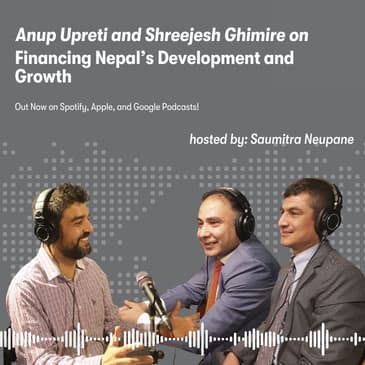
There prevail challenges to financing Nepal's development and growth in the midst of its limited sources of funding available. In this current climate of limited funding, foreign aid, foreign direct investment, and domestic resources have played a crucial role to sustain Nepal’s economy. Nepal has received financial assistance from several countries, including the US, Japan, and the UK, as well as international multilateral organizations like the World Bank and Asian Development Bank. The government has also implemented policies to attract foreign investment, particularly in sectors such as hydropower, tourism, and manufacturing. Additionally, Nepal has been focusing on increasing tax revenues and promoting entrepreneurship and small and medium enterprises to boost economic growth. However, there is a need for better coordination and monitoring of the use of funds, as well as a focus on creating an enabling environment for private sector investment to sustain growth and development in the long term.
In this episode, the first of a two-part series, PEI Executive Director Saumitra Neupane sits down with two guests, Anup Upreti and Shreejesh Ghimire to discuss the current state of, and the future of development financing in Nepal. They also discuss some of the underlying factors for Nepal's inability to mobilize financing for infrastructure and economic development and the roles and challenges of mobilizing foreign capital in the country.
Anup is a legal expert who regularly advises clients on diverse transactional matters ranging from foreign investment and project finance to private equity. He is the Managing Partner of Pioneer Law Associates and specializes in financial laws, foreign investment, private equity, and capital markets. He holds a degree in Banking and Financial Law from the Queen Mary University of London, U.K. Similarly, Shreejesh is the Chief Investment Officer at NMB Bank Ltd. and was formerly the CEO of NMB Capital Limited. He is an MBA graduate from Kathmandu University School of Management, specializing in Finance, Marketing. He also holds a BMCC from Pune University, India.
This episode has been partly funded by the generous contribution of VRock & Company.
Click here to support us on Patreon!!
[00:00:10] - [Khushi Hang]
Namaste and welcome to Pods by PEI, a policy discussion series brought to you by Policy Entrepreneurs Inc. My name is Khushi Hang. In this episode, the first of a two part series, Saumitra Neupane, executive director of PEI, sits with two guests, Anup Upreti and Shreejesh Ghimire, to discuss the current state of and the future of development financing in Nepal. Anup is a legal expert who regularly advises clients on diverse transactional matters ranging from foreign investment, project finance to private equity. He is the managing partner of Pioneer Law Associates and specializes in financial laws, foreign investment, private equity and capital markets.
[00:00:49] - [Khushi Hang]
He holds a degree in banking and financial laws from the Queen Mary University of London. Similarly, Sreejesh is the Chief Investment Officer at NMB Bank Limited and was formerly the CEO of NMB Capital Limited. He is an MBA graduate from Kathmandu University School of Management with a specialization in finance and marketing. He also holds a BMCC from Pune University India. We hope you enjoy the conversation.
[00:01:18] - [Saumitra Neupane]
Namaste, this is Saumitra Neupane.
[00:01:20] - [Anup Upreti]
Namaste, this is Anup Upreti.
[00:01:22] - [Sreejesh Ghimire]
Namaste, this is Sreejesh Ghimire.
[00:01:24] - [Saumitra Neupane]
Welcome to yet another episode of Pods by PEI. We have two guests in the studio today, and we are discussing financing Nepal's development and growth. The Nepali polity is filled with punditry and expert explanations on Nepal's economic development. Both our guests today are centrally placed in Nepal's economic development and economic growth mechanics. And the goal of today's episode is to bring out some new perspective to the discourse.
[00:01:52] - [Saumitra Neupane]
Anup, Shreejesh, welcome to the show.
[00:01:55] - [Anup Upreti]
Thank you for having me.
[00:01:56] - [Saumitra Neupane]
Well, I want to begin today's episode by laying out some context. And the point that I want to start with this rhetoric around Nepal becoming like Switzerland and Singapore, I think centrally this has shaped a lot of our imaginations going up of what development should look like or what growth should look like. Sixty five years down the road of planned development in Nepal, five separate constitutions outlining our growth models and our governance mechanisms, and our aspiration for development and growth still remains unsettled and unmet, not discounting the fact that in in these sixty five years, we've made some remarkable progress, especially on on the political and social spheres, political being that we have transformed from an autocratic centralized regime to now a federal democratic republic, and the social gains being those in sectors like health and education.
[00:02:55] - [Saumitra Neupane]
But despite this progress, we haven't made ways forward on economic spheres of development and growth. The progress there on our economic sphere has not been as desirable. The fact of the matter is that Nepal today, we barely contribute $1,200 per capita income, and our economy is largely dependent on remittance that we receive from export of labors. We are at the cusp of LDC graduation, as you guys know. And the interesting thing being that we are the only country to be graduating from LDC, but without meeting the income threshold.
[00:03:36] - [Saumitra Neupane]
This is very unique in its sense, and probably we'll go on to discuss this later in the episode. I want to kick off today's conversation by asking you both to briefly talk about your take on the state of development and growth in Nepal. Later in the conversation, we will go on to talk about how we can envision our future and how we can go about getting there. But let's perhaps begin our conversation today by your take on what was those visions that really captured your imaginations growing up and the trajectory that Nepal's development and growth process has moved thus far.
[00:04:16] - [Anup Upreti]
Maybe those of us who grew up in nineties probably can relate to me. So we grew up kind of listening to the same narrative. We listened to politicians selling us the dream of Singapore. In that context, what I think is, you know, I'm 45 years old now, and then I don't think so I have been able to enjoy the prosperity, what I had thought about when I was growing up. So I think that hasn't happened.
[00:04:44] - [Anup Upreti]
I think now what I'm thinking is when will this prosperity come? So my daughter is 10 years old. So first is will she be able to enjoy the prosperity in this country? If that happens, when will that happen? Is it going to be when she's 20?
[00:05:01] - [Anup Upreti]
When she's going to be 25, 35? At what time? At least when she's 45, she she should be able to do it, for example. Again, you know the context is really then we come back to you know prosperity could be very subjective. Maybe you know she just you could add on you know put the context of what could prosperity mean in terms of comparable perspective?
[00:05:25] - [Saumitra Neupane]
And you don't have to reveal your age.
[00:05:28] - [Sreejesh Ghimire]
Well, prosperity, probably like you know, when we were growing, probably a good party or a nice holiday was a prosperity. Like looking in the TV channels, seeing the outside world, the West, or the nice gift that we used to get when our parents or someone is traveling and bringing home was prosperity. But when deep down into it, prosperity, if you're really looking into prosperity for your daughter or my daughter, prosperity for me is more it's like connectivity, like good roads or the reels, which enables the easy mobility. Or the lifestyle, where one of the benchmarks that we use as on a development side, the consumption of electricity. Consumption of electricity is primarily like, you know, what kind of gadgets, how do you make your life easier.
[00:06:21] - [Sreejesh Ghimire]
Likewise, like good education. Likewise, good health care. These are all the prosperity factors. And and over the period of times, now when I travel myself or you travel, the the first question that strikes in all of our heads is like, you know, why why are we so laid back compared to the rest of the world? So maybe for India, the last twenty, twenty five years, where we feel was bringing the good investments, doing the right investments.
[00:06:48] - [Sreejesh Ghimire]
And again, the prosperity is primarily it connects to the income. So if your income grows, so you you can buy products. And to get the income, then you need to do the investments first. Probably, we haven't done the right investments, and that's why the prosperity part is still missing.
[00:07:09] - [Saumitra Neupane]
I like the way you've kind of operationalized this idea of prosperity, connecting holidays and lifestyle changes with things that need to be in place for us to do that. Right? And this, I think, is a good conversation to go back on on that question around LDC graduation. This idea of Nepal graduating without meeting the income threshold is very unique and this is a point that kind of for me reflects, I stand to think whether this is a good thing or bad thing, I don't know. But somebody who's worked in the financial sector, you understand the economy, you understand the value of money, you understand the value of income, what does this essentially mean when Nepal is graduating without meeting the income threshold?
[00:07:57] - [Sreejesh Ghimire]
Well, it's a challenge in itself. Primarily, if we look into the countries that are migrating from LDC, we are like, of course, a unique country, because the lot of preference and treatments that we used to get. The grants or or you know, mostly the funds that we used to get, we would have used that as a mix to raise a commercial capital. Use that to raise the income bar like Bangladesh. Now, since we are migrating into a lower middle income group, from 2026 onwards, the preferential treatments will not be there.
[00:08:36] - [Sreejesh Ghimire]
So that means doing business will be relatively more challenging. So in the last these years where where LDCs had we somewhere or other mobilized the capital towards bringing their income level up, it would have been a big help. So the days will be definitely challenged.
[00:08:56] - [Saumitra Neupane]
Interesting. Anup, what do you think about the state of Nepali economy not graduating without meeting the what does it actually signal? I mean, you talked about a very emotional description of what prosperity was when you began a conversation, but how does that actually translate to economy and the state of our economy today?
[00:09:15] - [Anup Upreti]
So I think, you know, this unique situation that we're in that we're meeting social parameters and really not meeting economic parameters. And at least if we see in our context, I don't see anybody's thrilled about we graduate to LDC. No politicians ever come out and said, yeah, this is because of me. It's odd that we've achieved something, but we don't see this as achievement. And I think there's a big vacuum here because we know we've not done well in economic parameters.
[00:09:45] - [Anup Upreti]
And, yes, I mean, other social parameters are very important, but if, you know, we'd graduated based on economic parameter, there would be actually be celebration. Now when you look at, you know, in terms of the challenges like Cesar's talked about as well. So we now have to compete with those countries with when our interest tax is not really ready or we're not economically ready or we don't have things in place to really compete with these countries. I think that's where we need to look at it and I think that's what we'll have to also discuss what could be those challenges.
[00:10:22] - [Saumitra Neupane]
So the question is about the readiness of our economy with LTC graduation, if I'm correct. Moving on, I think, like it or not, I mean, there's always benchmarks that our economic, social, or health parameters are compared to. We add the MDGs, we add now the SDGs. The World Bank has its own thresholds around income, and there is with LDCs and others. And Nepal is almost feels every country, not just Nepal, is responding to this with formulations around goals.
[00:10:51] - [Saumitra Neupane]
Right? Where do we want to reach it? There's always some vision or goal outlined. Well, I I don't think our policy papers talk about necessary now Nepal being like Singapore or Switzerland. But the reference being Nepal's 15 plan, the current plan, has set on another vision.
[00:11:08] - [Saumitra Neupane]
Right? It's like a long term vision for where we want to be. And that says, I'm I'm sure that you guys are aware of this, it says that by 02/1943, that we want to be a developed country that's at par, at an income threshold of 12,000 US dollars per capita. We could be debating whether this is realistic or not. Right?
[00:11:30] - [Saumitra Neupane]
Moving from 1,200 to 12,000, that is essentially requiring tenfold increment in our size of the economy. That's probably a discussion for some other day. But even for us to reach to 6,000, or move to the direction towards 12,000, what do you guys think are some of the major binding constraints for our economy?
[00:11:50] - [Sreejesh Ghimire]
Now interestingly, this LDC graduation is is is is a talk because normally the social indexes move along with the economic index. And in fact, income becomes one of the major driver that helps you to achieve the social goals as well. In our case, it's the opposite. One of the reasons is like we have not invest much, probably for like hundreds of years, we call it a laure culture, where during the old days, probably they used to go as an army man, bringing the remittance home, today as a migrant laborers. So relatively, for the politicians or the policy makers, the life has been way easier because some amount of foreign currency or the income comes home without much doing on the home ground.
[00:12:37] - [Sreejesh Ghimire]
So what we have failed is like we have failed as the necessary investments that we need to do. Our portion of the CapEx that we budget for.
[00:12:46] - [Saumitra Neupane]
CapEx being capital expenditures.
[00:12:47] - [Sreejesh Ghimire]
Capital expenditures. The budget with the recurring expenditures so that we have the regular expenditures that do. On the budget sides, even though we allocate something, but if you really see the expenditure part for the last probably last twenty years, this has been very poor. And again, the sectors that we have targeted and the growth that we should have achieved through the CapEx investment has really poor. So because of that, there has been a significant shortfall in this investment side.
[00:13:15] - [Sreejesh Ghimire]
Because of that, our income level has been poor. So going forward, let us let us forget like what has already happened. We laid out fifteenth plan. So we're already 2023 now. We have a 2030 dream.
[00:13:26] - [Sreejesh Ghimire]
So the fifteenth plan clearly leads out there. We plan to have a 10% plus growth. We call it in a CAGR or cumulative average growth rate. Even for a 5% annual growth, our annual mobilization, mobilization in terms of capital like the government expenditure and from the financial institutions like banks, mostly the banks here. So roughly it's around 700 to 800 billion Nepali rupees.
[00:13:53] - [Sreejesh Ghimire]
That is equivalent to roughly 6 billion worth of dollars. That is that is the maximum that we have that we can mobilize. So with that we normally achieve around 5% worth of growth. So there's a street shortfall of almost like 5 to 6 billion dollars of annual investment deficits if we really want to achieve the 10% growth and twenty thirty three. Well, that's a pretty big number.
[00:14:18] - [Saumitra Neupane]
So clearly, we've discussed that our economy, especially with regards to investments, we're trading behind. Right? So while other sectors are moving quite well, social health, etcetera, our economy is not doing as it was supposed to do or as expected. And there is a big financing deficit. Anup, where is this financing supposed to go?
[00:14:42] - [Anup Upreti]
I think, like, Caesars also kind of raised that particular issue. It has to go in the infrastructure side. It should be generating income for us. It should be generating results for us. So I think again to add with this is we have this constraint about where the money is coming from, where the finance would go.
[00:15:02] - [Anup Upreti]
But I think equally important is how we're implementing it. I think that's where the real challenge also we see. I just wanna give an example of what I see every day. So I stay in Sithapala when I drive to office. I have to go past this bridge in Kalimatic done by Popu Construction.
[00:15:21] - [Anup Upreti]
Right? This bridge has been done. I don't know if the fund has been dispersed or not, but that is there. The bridge is there. I think it's used as a parking.
[00:15:30] - [Anup Upreti]
I see that. And in in our context of how we are doing it from an implementation perspective, how we are making policies a big problem here. When we talk about constraint, it's not only about financing, you know, so we might raise financing, we might have capital, but the issue is how we are making policies and how we are implementing it.
[00:15:50] - [Saumitra Neupane]
Excellent. So what I'm picking up is that there is a big infrastructure deficit, and we also have a big financing constraint. And the third element being that the broader ecosystem of how this is done with regards to policy or investment climate, that is really like the three major binding constraints for the Nepali economy to at least move towards the direction it has set. This is actually a good segue for us to move into a more elaborate discussion on financing. And, Shreejesh, I wanna begin with you very broadly.
[00:16:24] - [Saumitra Neupane]
What is the state of development financing in Nepal? We know for a fact, as you've said, that there is a big deficit as of now, but you can also talk about some of the sources of financing in the Nepali market today.
[00:16:40] - [Sreejesh Ghimire]
Well, so far, our major financing comes from the domestic capital. Post 1990, primarily few more sectors were opened up to the private sector. And to list it down, it was transport, telecom, and the banking. So in in last thirty years, if you see the banks opening the banks to the private sector where some amount of foreign capital have also come with the they have also been the expertise, the financial models and today the private banks have more or less equal kind of trust like a government banks. So where I'm coming from is today out of the total domestic capital that is mobilized almost 70 to 80% is mobilized through the banking sector.
[00:17:23] - [Saumitra Neupane]
Just before we go then, I'll I'll just stop you for a moment. You mentioned that domestic capital is a big source. So what percent of our current if there's a number, what percent of our total financing at the moment is comprised of domestic capital?
[00:17:36] - [Sreejesh Ghimire]
So minus grants, there are very less of foreign debts except for the good thing is like the government borrows mostly from the multilateral and the bilateral agencies, not the commercial borrowing. The process of commercial borrowing by the banks have just started. We were one of them as a bank way back in 2018, we started commercial borrowing. Else, it is, except for the grants, the largely the bilateral loans that is raised by the governments is largely the deposits that we raised in the local market. And and in fact, those deposits, the major chunks, it is supported by the remittance.
[00:18:08] - [Saumitra Neupane]
And you you've been in the sector too long, and I'm sure you can answer this, is how much of the domestic financing is actually going to big infrastructure or, like, building hydropower or building roads or other means of infrastructure, if there's a number or a percentage that you can quote?
[00:18:27] - [Sreejesh Ghimire]
Well, this is a very tricky question. See, everything we need to align with the dreams that we are planning to have. For say, like 02/1930, we plan to have almost 6,000 megawatts of power. Today, have almost 2,400 megawatt of installed capacity. That is in next six years or next last next seven years, we need to build another 3,000.
[00:18:50] - [Sreejesh Ghimire]
Only on the energy, I'm I'm just touching on the energy side. I'm not talking about roots. I'm not talking about any other aspects. Only for energy we need almost like even if we really want to reach around 6,000 megawatts by 2030. In fact, the dream was for 15,000 megawatts if you if you see the plan laid out by the government.
[00:19:11] - [Sreejesh Ghimire]
And by 2043 we want to reach around 40,000 megawatts. So even reducing that number to 6,000 based on the calculation for sale like if every megawatt of power demands around 20 crores of Nepali rupees, then we need even in today's piece if we see like the banks investing to their potential, we would be needing at least a $5 billion worth of investment in energy sector alone for next seven years street. So the the first question that we need to answer here is like one, what are our dreams? Like where all we want to grow? And what are our priorities?
[00:19:44] - [Sreejesh Ghimire]
Like Anup rightly said about the bridge. The bridge is already completed by Pappu Cons...
[00:19:50] - [Saumitra Neupane]
But it's still not serving interest.
[00:19:51] - [Sreejesh Ghimire]
It's not serving the interest. So whatsoever, the capital has already been deployed there, and that's stuck up there. So that is not giving you any productive returns. So based on our priorities, you know, what kind of the sectors that we want to target to bring the productivity, then we can decide like what kind of capital that we need. But the question here remains like, do we really have enough capital to invest there or not, one.
[00:20:16] - [Sreejesh Ghimire]
Number two, even we have. Do we want to free our domestic capital for the areas which are our core priorities and bring in foreign capital so that we can grow the way we have set up our dreams. So for now, roughly just one sector like energy demands, roughly $5 billion provided we really want to achieve that dream that we have laid out.
[00:20:39] - [Saumitra Neupane]
And that's our requirement that you mentioned that just going to one sector, right? So that's an interesting point. I just want to come to you for the same question. I mean, you being in the legal industry, how do you see Nepal's financing sector growing? And then the specific point being the liberalization in 1990s.
[00:20:59] - [Saumitra Neupane]
Right? Srijas mentioned that that was really a pivotal point where the banking sector came in, and today, this served a big interest towards mobilization of domestic capital. How pivotal was that, and what are your observations on this?
[00:21:12] - [Anup Upreti]
You know in terms of our foreign investment law, the most famous one is 1992. That's where we'd also open up our market. But what I feel is the amount of investment that should have been here, that's not really coming in, either we talk about equity or debt. In all of these products, Nepal probably has not been able to attract in the same volume as, let's say, Bangladesh has been able to do it. And I think we need to figure out what the constraints are and why, you know, investors are not really coming in.
[00:21:47] - [Anup Upreti]
And we can look at some of the data later on, and then we'll know what are the constants on equity side, what are the constants on debt side, what are the policies issue that we'll probably need to look at.
[00:22:11] - [Khushi Hang]
Hi there. This is Khushi from Policy Entrepreneurs Inc. We hope you're enjoying Pods by PEI. As you know, creating this show takes a lot of time and resources, and we rely on the support of our community to keep things going. If you've been enjoying the show and would like to help us out, we'd really appreciate it if you could become a patron on Patreon.
[00:22:32] - [Khushi Hang]
Patreon is a platform that allows listeners like you to support creators like us with a small monthly donation. Your support will go a long way in helping us to continue creating high quality content for you. So if you're interested in supporting our show and becoming a part of our community, head on over to Patreon and become a patron today. You can find us at patreon.com/podsbypei. Every little bit helps, and we can't thank you enough for your support.
[00:23:00] - [Khushi Hang]
Now let's get back to the episode.
[00:23:12] - [Saumitra Neupane]
So if you were to draw a trend line of how our sources of financing, especially on the infrastructure side, has changed post liberalization. Right? So in our own research, what we kind of pick up is that most of the larger infrastructure are bilaterally financed, or there are multilateral sources of financing, and there is a a grant or a concessional arrangement. And now we are talking about because this is still not going to be sufficient, that we borrow from outside. Is that correct?
[00:23:44] - [Sreejesh Ghimire]
Yes.
[00:23:44] - [Saumitra Neupane]
So there are things like FDI. Right? You have commercial foreign borrowing that is on commercial terms. You have concessional loans. Right?
[00:23:53] - [Saumitra Neupane]
So these are all forms of financing that is available. What is the broadest range of what these things are and how they differ from one another?
[00:24:03] - [Sreejesh Ghimire]
These days capital brings the instruments. It might sound rather than just saying like equity debt or like you know concessional loans and all that. Concessional loans are primarily provided by the multilateral bilateral agencies, primarily again looking into the social factors, more of social factors along with the commercial factors. But if we are targeting commercial kind of borrowings, it can change into any form. Today most of the funds are not raised only through debt or pure equities.
[00:24:35] - [Sreejesh Ghimire]
We call it a private equity, venture capital, alternative investment funds. A hedge fund could be still still a bit far fetched. For for infrastructure projects, there are real estate investment in a model of trust, in a model of funds. Infra funds. So you pull the assets and you can list, you can raise the capital and it works like a fund.
[00:24:54] - [Sreejesh Ghimire]
So there are different kind of products that are available based on your need. It's it's like you know you customize based on a broader product category like there could be equity debt hybrids. There could be profit partners even on a debt side like coupon rate or interest rate of debt could be little bit smaller but you participate in the success side of the project as well where is a where there is a profit. So based on the need and the viability of the project along with the risk taking by the investors. Today most of the capital that are raised through on an instrument mode on a broader product category.
[00:25:31] - [Sreejesh Ghimire]
So equity these days are relatively, it has been kind of old dated. Yes, equities are raised but the sponsors starts of the idea, sets up infrastructure and the funds come in investing as a growth capital. So we cannot limit, you know, post 1990s even though we are a liberalized economy. We are yet to explore ourselves to the outer world, like, you know, what forms of capital that we can bring and how can we be more flexible towards bringing this kind of capital.
[00:26:02] - [Saumitra Neupane]
I I just wanna step back. I mean, we've we've been talking about complex financial instruments, models, and I myself am not aware of some of these things. But still, the reason why I want to step back is, as a lay Nepali, we talked about the larger development narrative, and the context has been that on the infrastructure side, especially large infrastructure, is that, oh, there's going to be a country that is going to give us some grants, we're going give us money, and then we're going to build projects. Right? And what I'm kind of making out from this conversation is that approach of how we finance our infrastructure is not desirable, neither is really sustainable, and we really need to think beyond.
[00:26:47] - [Anup Upreti]
I think, see, what is happening happening here is I don't think that there's any good example of any critical infrastructure which has been developed by private sector. Let's exclude energy for a bit.
[00:27:00] - [Saumitra Neupane]
Well, in the Nepali context.
[00:27:01] - [Anup Upreti]
In the Nepalese context. So roads, everything that has been developed so far has been all publicly financed through taxpayers money, through government taking concessional loans. In this context, think what is really interesting to see as to, you know, there's an episode of, you know, what happened with Torai Fast Track project, which government bid, and that was going to be one private sector finance project. Right? So but what happened?
[00:27:29] - [Anup Upreti]
Ultimately, at the final stage, government canceled the thing. They were ready to award the concession, but they did not sign it. And what happened was we ended up using public finance tax base money to really do that construction. And I think we know the results though, I think three times more the cost has been and time has
[00:27:49] - [Saumitra Neupane]
been The opportunity cost is pretty big. We can come to fast track later. Yes.
[00:27:53] - [Anup Upreti]
So but, you know, the example is we don't have any infrastructure projects which have been financed from private sector. I think till now, and that's not really a good state to be in.
[00:28:04] - [Saumitra Neupane]
So we discussed that we will need foreign capital. I'm assuming that foreign capital is not going to come by itself. Right? And that it needs to be attracted. So have we done enough to actually attract foreign capital in Nepal?
[00:28:19] - [Saumitra Neupane]
Is is Nepal an attractive market for investment? What do you guys think?
[00:28:24] - [Sreejesh Ghimire]
Well, the first thing is, I think it's more of a mindset and how do you market yourself. See, at one point in time, probably ten years back, it was always the returns first when it comes to the investment for any any commercial capital. Like, you know, if the returns are good, there is a risk taker. But today, if you really see safety is the most important component and the liquidity of your investment is the priority.
[00:28:50] - [Saumitra Neupane]
So in what regards?
[00:28:53] - [Sreejesh Ghimire]
Suppose like somebody invests in Nepal and they want to first up for any reason, if they want to exit, if they want to shut down the business and go, how easy is the process? How fast they can liquidate and take back money home? And then it follows the the returns. Returns is like kind of a negotiation. There is no hard and fast rule that I need a return here.
[00:29:12] - [Sreejesh Ghimire]
We have seen projects in Nepal by the foreign lender community with the DFI or commercial probably an IRR of 8% to probably 16% or 24%. IRR is internal rate of return. So somebody is ready to invest even at 9% and somebody is also looking for 24%. So it is so debatable. But the first question here we need to answer is like will there be an easy entry and exit route.
[00:29:34] - [Sreejesh Ghimire]
If I want to liquidate and can I go back? So as a country the first thing that almost all those countries who have been able to raise a handsome amount of capital is relatively the easy flow inlay and outlay of capital. India for example or China. So these are one of the biggest countries who attract the biggest amount of FDIs. We talk a lot about Chinese political regime, but still the investment easily flows to China and it it comes out.
[00:30:02] - [Saumitra Neupane]
So it is not just about profits, but investors are essentially looking for profits, but equally important is the business enabling environment and the level of transaction cost that is required to come in, grow out of the business. Right?
[00:30:18] - [Anup Upreti]
You know, in terms of infrastructure financing on your question on have we done enough? So two things I want to share is first, you know, in most of the discussions we've had with clients, they ask, is there a track record of exits that foreign investors have made in Nepal? And, yes, I mean, we can show some track records, but we don't have enough data to actually demonstrate to the real commercial private sector investors to really for them to be convinced, yes, there's a solid track record, you know, money can be taken out of country. So I don't think a lot of foreign investors are convinced. And broadly, when we say about have we done enough is also is our policies, structures, regulations a bankable document.
[00:31:05] - [Anup Upreti]
See, I mean, any investors, of course, they're gonna put equity, but ultimately, they'll also have to raise debt to finance that particular project. And daily question comes to, you know, is there a bankable regime in Nepal so that both equity and lenders can really invest in infrastructure.
[00:31:22] - [Saumitra Neupane]
Anup, I want to continue the discussion with you and drawing from something that Sujay said mentioned around mindset. And this is something that is not very clear, but something that you kind of sense when you're engaging in the nepari policy space that there is some hesitancy or reluctance when it comes to conversing on bringing in money from outside. Do you sense that there is that hesitancy on the Nepali policy space, and why is that the case if so?
[00:31:51] - [Anup Upreti]
Why? I don't know. I'm still trying to figure out, but definitely there is. I think there are two big issues that we face or we feel when we are interacting with policymakers. First is I think there is generally distrust on private sector.
[00:32:05] - [Anup Upreti]
And second is in terms of, foreign investors, foreign lenders, there's also this feeling that they are just out here to make money. They're going to take money out from Nepal. They're going to earn from our resources. I feel that is the case, and it's kind of reflected in some of the policy that comes out, this mistrust or lack of confidence. I don't know why it is there, and I also don't know how to resolve that as well, but it's definitely there.
[00:32:35] - [Saumitra Neupane]
Shreejesh, your thought on the same. Clearly, I mean, the numbers that we discussed and the context that we discussed were really pointing to the fact that our economy is not going to grow without debt. Right? And that debt has to be financed from somewhere because there is going to be a limitation on on the side of the Nepali capital mobilization. Right?
[00:32:55] - [Saumitra Neupane]
So what are your thoughts on on this whole mindset of Nepali policy space because you are interacting on a day to day basis?
[00:33:01] - [Sreejesh Ghimire]
So well, let me just give you one example. In 2018, we just did one deal of $15 million. We ourselves were hesitant. We didn't know whether we can do that or not, how do we hedge this portfolio. But realizing this unless we have a foreign capital even for a local banks to grow their balance sheet, we need a debt.
[00:33:24] - [Sreejesh Ghimire]
So for any investor the debt is the first proposition because somewhere other there is a you know the risk is relatively limited. There is a counterparty who is going to pay. You assess and you just take a small amount of risk. Equity relatively is for the country like ours, it's relatively not it's kind of inflexible at times. So that you would repay.
[00:33:49] - [Sreejesh Ghimire]
2018, we just started the $15 million and we set a precedent. 2022 or 2023, we're doing a single ticket of $100 million deal. This year itself, I have a pipeline of almost $140 million which is equivalent in a...
[00:34:06] - [Saumitra Neupane]
That is money coming from outside.
[00:34:08] - [Sreejesh Ghimire]
Money coming from outside. So yes, we have horizon of like, based on our need probably we can draw we we can take a draw down in the next two years in the biggest deal of $100 million. But if you just look into for the country's perspective, the total FDI figure itself is near about the same amount of money. So a bank with its own efforts, of course, like with the help of central bank and all like with making the policies, there are some inflexibilities where we have a difference of opinions. But again, why I'm I talked about mindset is like, had we just rejected the first transaction, there would that not been any precedent.
[00:34:49] - [Sreejesh Ghimire]
And every transaction that we have done since 2018, somewhere other in terms of interest rate that we pay for debt, except for the reference rate, the premium or the risk, the cost of risk has relatively reduced. So the lenders are more flexible. So in terms of like you know, you are giving more money at a cheaper rate. And today the Nepalese banking diaspora, a lot of banks are now going outside and borrowing the capital. So why why I just wanted to give this example as a as a bank primarily it falls under my portfolio.
[00:35:21] - [Sreejesh Ghimire]
I know the story and some deals like Anand is also there. He knows the story as well. So what I'm trying to say here is we need a foreign capital and we need to set the precedent first that, you know, the transaction happened. There will be a repayment and we'll be flexible enough to help you out as well. So the government needs to trust the private sector.
[00:35:39] - [Sreejesh Ghimire]
Post 1990, had the banking not or the transportation industry not been open to the private sector, where would I have been today? So in terms of like the road transportation, in terms of air transportation, who leads the so today? The private sector. Banking, private sector, and relatively more efficient. So fast track or any any examples that we take.
[00:36:02] - [Sreejesh Ghimire]
So the money flows where there is efficiency. And government needs to facilitate on this. And some way they have a kind of I don't know like we call it a mistrust but there is a kind of strong hesitation like you know the narrative is they make profits. All investments looks for profits and that's that's where the efficiency lies. So the fast track had it been like made in I think it was 110 billion Nepali rupees equivalent or probably 115 billion.
[00:36:28] - [Sreejesh Ghimire]
Today we are not even sure whether it will get completed in 300 billion Nepali rupees equivalent and the given timeline. So somewhere we have to come out of this. We can see like Bangladesh has come out of this. India has come out of this and they're doing fairly good.
[00:36:45] - [Saumitra Neupane]
One of the strong narratives that exist in the Nepali finance space is this question around debt versus equity. Right? I mean, part of our conversation today has been we need both, but you almost feel there's a tension around debt versus equity. And, Shizesh, you mentioned FDI, FDI being a form of equity coming in, and you take global examples in the the region itself, countries talking about we need more investments. One, we need more investments.
[00:37:10] - [Saumitra Neupane]
What is the FDI seen in Nepal?
[00:37:13] - [Anup Upreti]
So Bangladesh attracted, 2.9 billion US dollars in 2021, and we did 0.2 billion US dollars. I think from that perspective, it's very clear that we've not been able to really attract foreign investment. And whatever foreign investment they're coming in is mostly in energy sector. So there's no diversification as such.
[00:37:38] - [Saumitra Neupane]
So if you were to really, sticking to FDI, if you diversify and aim for bringing in investments from more advanced and developed countries like US or UK or from Europe, why aren't they coming in? Aren't the returns or other business enabling environments really constraining that investments?
[00:38:00] - [Anup Upreti]
Okay. So we had one situation where our client had started the hydro project same time in Vietnam and in Nepal. So Vietnam in energy sector, they're already completed, COD was done, completion was done, and in Nepal they will not even reach the finance and close in five years, right. So imagine that kind of investor if they are, that's why they'd probably not even look at Nepal next time. Second is, I think from other sectors where, investor may have a lot of options.
[00:38:31] - [Anup Upreti]
So what is the advantage? What is the benefit we're providing to foreign investors? So for any project, they're looking at, let's say, Nepal, Vietnam, or other jurisdictions to see which country should be established this particular project. Right? They had option to go to India or Bangladesh or Nepal or Vietnam.
[00:38:51] - [Anup Upreti]
You know, as a multinational, you have a lot of choices. Right? So there's not a single parameters that Nepal can produce and give it to the head office to say come to Nepal because this is what we have advent advantage as compared to, you know, India or, you know, Vietnam. So that's where our limitation is as well. And when you look at the, you know, cost of labor and so forth and then add Nepal generally being very time consuming country, that does not really make Nepal as a good attractive destination as well.
[00:39:25] - [Saumitra Neupane]
Just to broaden this conversation to a relevant point, and and that being that we talked about Bangladesh, Sri Lanka, India, and how successful they've been, in some regards than others, to mobilize financing, right, for the infrastructure development work. But the contexts are, well, in some sense, similar in the sense that our society, the way we do business, all of that is same. And then there are other elements that we are different on, right? And that is what has probably taken them a step forward to draw in more investment. But even for these countries, I'm assuming there were some barriers in the initial days of when their growth story began or when their financing to bring in finances from outside began.
[00:40:10] - [Saumitra Neupane]
Can you share to our listeners some examples or your own observations of why these countries, what barriers these countries really cross to mobilize finances for infrastructure development.
[00:40:24] - [Sreejesh Ghimire]
Let me just put up a couple of points here. One, as a flow of capital, the first debt flows in. So whether we like it or not, equity is relatively longer term, whereas the debt is time bound. So debt has a repayment timeline, whereas equity does not. So because of that, to start with debt becomes relatively easier for any of the investors.
[00:40:46] - [Sreejesh Ghimire]
Second, on a policy level, before I go into a deep down into samples. On a policy level, we see most of the policies when they come they are very half hearted. So for the investor, the first thing is the commitment. And second, based on that commitment, the investor builds their own confidence to invest. So when a policy becomes half hearted, your energy primarily goes to like, I don't know you say, like, whether to invest in Nepal or India or Vietnam.
[00:41:12] - [Sreejesh Ghimire]
Investor is looking Nepal may be a very attractive destination, but there could be another destination where it's really more attractive. So investor primarily flows there. So this is what's happening. So even we clean that, we have hydropower, we have this, like, we are one of the best countries in the world when it comes to tourism. Say, the only planet said this and that, but people are not coming here.
[00:41:35] - [Saumitra Neupane]
So Other countries are doing the same probably, right? They are also marketing themselves.
[00:41:38] - [Sreejesh Ghimire]
Exactly. Our policy makers, as as of to set the precedent, these are 10 best projects that we want to showcase to the international community, the investor community, and come and invest. And these are really good profitable projects. So once these projects are true and it establishes a precedent, then the others investors automatically follow. The way I I put up the example that we just started with a $15 million small fund 2018.
[00:42:05] - [Sreejesh Ghimire]
Today, one deal in five years is $100 million. So it applies to to the government as well. How will they showcase themselves to international community that Nepal is a bankable and a very investor friendly country?
[00:42:17] - [Anup Upreti]
Think there's a really good example in how India did. I mean, we've heard that the chief ministers visiting big companies outside and how they were creating ITC sector there. Very recently, Radhesh Panta said in an interview that investment in Nepal will not come just by publishing ad in Gorkhapatra. Our prime minister has to write to the CEOs And I think that's the difference between what other countries, neighboring countries have done and what we are not doing, I think.
[00:42:48] - [Saumitra Neupane]
What is the reluctance on Nepal or Nepali policymakers' side not to do that?
[00:42:54] - [Sreejesh Ghimire]
Well, me just add, see, like, whenever we talk about investment and risks, the bureaucracy or the bankers primarily look from not the opportunity side, you look from the risk side. So we have a very bad precedent. The small countries like ours, 1990, we call it Asian crisis. Thailand, Malaysia and Indonesia like serious foreign debt, foreign capital outlay and because of that like it was a serious mess. So Nepal is a small country.
[00:43:20] - [Sreejesh Ghimire]
Yes, we have a lot of foreign capital and one fine day if like you know a bigger chunk of exits are there it could be very difficult. So you need a balance. Well, Bangladesh, the good good example of Bangladesh is their policy consistency, primarily on the on economic issues, likely the governments. All the political parties are aligned in a common kind of economic policy. They will not hamper the export of governments.
[00:43:47] - [Sreejesh Ghimire]
Now the narrative has been so strong that even a lever understands that without these, we should not stop. Even there is a like, know, there are difference of opinion and we have the PDAs whatsoever. We will solve it, but we'll not stop the production. We'll not let cheese the investors so that they just don't want to do business in this country. But our key is like whenever it comes to foreign investors, we see based on the news and our life.
[00:44:12] - [Sreejesh Ghimire]
Some way we think about like, you know, monetizing before they make the money itself. That's a good way
[00:44:21] - [Saumitra Neupane]
of saying that. So Our way of doing business is very exciting.
[00:44:25] - [Sreejesh Ghimire]
Again, Again, commitments are very important. This year, India in last Okay.
[00:44:30] - [Saumitra Neupane]
We made we made several and several commitments. Right? I mean, it's commit we're we're not short of commitments.
[00:44:36] - [Sreejesh Ghimire]
But like a consistent commitment. India, I would say way back when Raghuram Rajan was a RBI governor then, the first thing to like, you know, attract the foreign capital that he did was he bought an inflation link bond. So for the foreign investors, the risk of currency debt is somewhere other RBA committed that we will commit ourselves to maintain the inflation. See, the corpus that was raised was not very big, but the message delivery that went throughout was really big. That as a country, we are committed to attract foreign capital, and we'll help you to grow here.
[00:45:12] - [Sreejesh Ghimire]
And since then, wherever is the government, whether it's BJP or any any political party, they have a clear agenda of growth. Even this year, a significant chunk of India's budget has been committed for infrastructure development. Last year, to my surprise, we talked about green bonds like the big noise. The Indian government raised a green bond with 16,000 crores as a sovereign bond. A 16,000 crores India, the size of the GDP, size of the nation, the size of the capital that's flowing in may not be a big amount.
[00:45:42] - [Sreejesh Ghimire]
But the kind of message, the kind of mindset, that kind of commitments that you have delivered to the investment world or the investors world outside is really big. That clearly sets a precedent and a commitment together that this country is bankable and as government like we are also somewhere other working with the private sector to bring this capital. So we have somewhere other field on that component. We have a serious policy incontinence. One example that I just want to add here is like, we bought a simple, you know, with much of talks we bought.
[00:46:13] - [Sreejesh Ghimire]
We call it specialized investment funds. Globally it's largely the alternative investment funds. The private equity venture capital hedge fund guideline. The final regulation like you know put a line that if you if you are bringing a FDI you need to go through all the FDI processes. So alternative investment funds globally are raised to attract the foreign capital because your domestic capital itself is not enough to to take those kind of risk that it intends to invest.
[00:46:39] - [Sreejesh Ghimire]
So the investment community, once they read the draft, their biggest questions, Are you really committed to bring the foreign capital because like they were hoping that through this regulation that was brought in, they were expecting, you know, at least for smaller capitals, it will be an easy way to enter the Nepalese market, but that didn't happen.
[00:46:57] - [Saumitra Neupane]
What is the perception on side of the foreign investor? Know you've you deal with several of of them. We talked about messaging. What is the current the understood message on what is it like to invest in Nepal, especially with foreign investors?
[00:47:14] - [Anup Upreti]
Right from day one, when you speak to them, they already know Nepal is a difficult country to come in from an entry perspective. They also know Nepal is a difficult country to operate. But then most of the investors I have interacted with, totally commercial reasons are only for the energy sector. Other sectors, they are in Nepal just because their CEO loves Nepal. Their CFO has traveled to Nepal.
[00:47:40] - [Anup Upreti]
You know, even IT sector. I mean, we talk about Nepal.
[00:47:43] - [Saumitra Neupane]
But there is a goodwill factor.
[00:47:44] - [Anup Upreti]
There is a goodwill factor. I mean, definitely, we have that goodwill factor. But then we've not been able to really add other business friendly factors really complementing it. And I think that's really unfortunate. We've not been able to really take a good mileage on our goodwill factor.
[00:48:03] - [Saumitra Neupane]
Just before we end this section, I wanted to touch on this case of Sri Lanka. Right? We talked about how countries in the region were raising funds for for the infrastructure, and then bang, you had the Sri Lankan story. And then it had repercussions even up to Nepal where, like, there was alarms set off around borrowing.
[00:48:23] - [Anup Upreti]
We had not talked about Sri Lanka so much before this.
[00:48:27] - [Saumitra Neupane]
Well, the fact that there is there is when we are discussing foreign financing, there are things happening in the neighborhood, and that is signaling policymakers that, hey. Maybe that's a danger that we should not threat. Right? So how do you interpret the Sri Lankan story? What has happened in the Sri Lankan economic crisis?
[00:48:46] - [Saumitra Neupane]
Because a lot of their funds were sourced by the government sovereign bonds that were floated in the international market. And then that has its own risks. Right? So are we in a position as a Nepali economy today to observe these risks if anything happens?
[00:49:02] - [Sreejesh Ghimire]
Sri Lankan story or the Bangladesh story, it's a very good story for us to understand. It gives us a very clear case study kind of narrative. So my reading is like, Sri Lanka raised most of the capital or bonds or whatever you name it. They brought money home, and they did the projects with aspiration. They just wanted to build the projects, big projects.
[00:49:26] - [Sreejesh Ghimire]
Bangladesh built most of the project that were in demand. Basically, all these investments that are there are promoting the exports. Whereas, Sri Lanka with the port or airports. Yes. The airports are met, but there is no surety whether there will be a flight or not.
[00:49:46] - [Sreejesh Ghimire]
So what Bangladesh did was maybe it will take some time to build a good amount of revenue, but it supported, the existing infrastructure that they in fact that they upgraded the existing infrastructure to support the export industry which helped them to get more of the competencies in the international market. They knew they will be migrating soon to the middle income group. They will lose the preferential treatment. So just as a compensation like you know as a to be more competitive in that front they invest in those areas whereas if you see the Sri Lankan story those are largely based on aspiration that the business will happen. So these two key studies are very important.
[00:50:28] - [Sreejesh Ghimire]
As a nation, if we set our priorities right and we know where, what all we want to build, what kind of projects are in demand, See, debt is never a curse, because if you use debt in a holistic way, it gives you a very good return. If you have a source of revenues coming, the debt is friendly.
[00:50:47] - [Saumitra Neupane]
So it depends on how, what mechanisms you have to service that debt, Right?
[00:50:50] - [Sreejesh Ghimire]
Yes. You need to have projects, like the projects that brings you revenue. Like, you need to be sure about, like, you know, these projects will click. The debts will get served.
[00:51:00] - [Saumitra Neupane]
This is a good thought, and probably we can take this up in the next episode. I needs versus financing aspirations. Right? Before we close this episode out, there's this one last point. I mean, we've we've been discussing financing and infrastructure, and then the white elephant that we've not addressed in this conversation is climate change, right, because our infrastructure is going to be really vulnerable to climate change.
[00:51:28] - [Saumitra Neupane]
We've already started noticing this across infrastructure projects, including hydropower. And then in in the global marketplace, there seems to be capital accumulation happening to be a source around climate financing. Just so that our listeners understand what this is, can you guys talk about climate financing, what that is and what that would look like?
[00:51:52] - [Sreejesh Ghimire]
Well, financing seems like it's it's must talked about, but it's not that difficult. But again, it needs a hell of a commitment. So, like, you know, for the project to qualify as a green, and like, you need a firm commitment on the government. Today, as Nepal government, if I see, if they can really talk about the impact story that it creates, it could be one of the best ways to raise the funds. Even you get a concessional debt or even there's a sovereign bond as a relatively cheaper price provided you have a good project.
[00:52:23] - [Sreejesh Ghimire]
So the project could be instead of buying buses, if the Nepal government showcases their will, but the infrastructure like the charging stations throughout the country, it could be see the buses are operated by the private sector if it's profitable. One of the major constraint would be the charging stations and the workshops and all. A good example, Lumini. So I don't want to go into the airport side, but at least we brought couple of buses and electric vehicles that are yet to operate. Why?
[00:52:49] - [Sreejesh Ghimire]
There's not enough infrastructure on the charging station side. On a clean story as well, you need a firm commitment like what clean infrastructure that you're going to build. So Nepal government has a like, probably this is a good piece, a very small country. We don't need a very big amount of funds to do the projects because the size or scalability of this country is relatively small. Now you start analyzing what kind of assets that qualify for green and what kind of infrastructure that we plan to probably bring by 2030 or February.
[00:53:19] - [Sreejesh Ghimire]
This could be an easy way to raise finance.
[00:53:21] - [Saumitra Neupane]
Oh, I just wanna get your response on this. So moving beyond financing on the climate front, is this really a point of departure for Nepal to rethink its financial paradigm and its developmental paradigm? Right? So you, in the initial part of the conversation, mentioned about what our development trajectory is gonna look like, what our prosperity is gonna look like. So do you think climate change is that window that we kind of try to draw together these parallel streams around financing infrastructure and looking at what our development pathway is going to be.
[00:53:58] - [Anup Upreti]
Yes. I think, you know, in the beginning, talked about where is the prosperity coming from. We talked about policies needed, money needed, and we also talked about convincing people who have money to invest. And I think climate finance is that part that it will help us convince people who have money to invest because we what we've seen in internationally, there are a lot of investors who are willing to invest in clean projects. So this is the new area where we can really tap into.
[00:54:30] - [Anup Upreti]
And I think in terms of really development goals also, Dennis, if we can raise funds from that perspective and we are growing in the path of doing, you know, green projects, our development would be, let's say, very aligned with the prosperity dream that country has seen.
[00:54:48] - [Saumitra Neupane]
And on that note, we are at the end of the first part of my conversation with Anup and Shreejesh. Please tune in to listen to the second part of my conversation available on all platforms for by PEI. Thank you.
[00:55:08] - [Khushi Hang]
Thanks for listening to Pods by PEI. I hope you enjoyed Saumitra's conversation with Anup and Shreejesh, where they discussed the current and the future of development financing in Nepal. Today's episode was produced by Nirjan Rai with support from Saurav Lama, Chhedon Kansakar, and me, Khushi Hang. The episode was sponsored by the generous contribution of V Rock and Company. The episode was recorded at PEI studio and edited by Hidesh Sapkota and Nirjan Rai.
[00:55:33] - [Khushi Hang]
Our theme music is a courtesy of Rohit Shakya from Jindabad. If you like today's episode, please subscribe to our podcast. Also, please do us a favor by sharing us on social media and leaving a review on Spotify, Apple Podcast, Google Podcast, or wherever you listen to the show. For PEI's video related content, please search for policy entrepreneurs on YouTube. To catch the latest from us on Nepal's policy and politics, please follow us on Twitter tweet2pei, that's tw e e t, followed by the number two and PEI, and on Facebook PolicyEntrepreneursInc.
[00:56:09] - [Khushi Hang]
You can also visit pei.center to learn more about us. Thanks once again from me, Khushi. We will see you soon in our next episode.