
To support us on Patreon: https://patreon.com/podsbypei
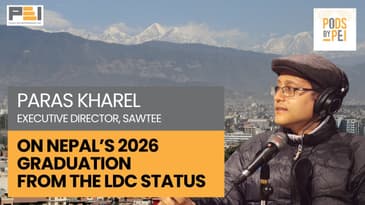
In this snippet of #PODSbyPEI, Dr. Paras Kharel discusses the rationale behind categorizing countries as LDC and commentates on #Nepal’s graduation from the #LeastDevelopedCountry (#LDC) status and its implications on #trade, #developmentassistance, and #policy space. Paras provides his insights on the impacts and problems that Nepal not meeting the income criteria could pose in the future for Nepal to sustain the LDC graduation.
LISTEN to #PODSbyPEI on Spotify, Apple Podcasts, Google Podcasts, or wherever you listen to the show. To catch the latest from us on Nepal’s policy and politics, please follow us on Twitter at Tweet2PEI, and on Facebook at policyentrepreneursinc. You can also visit pei.center to learn more about us.
FULL EPISODIC DESCRIPTION:
In 2026, Nepal will be graduating from the LDC status after meeting the graduation criteria for 3 consecutive UN triennials (2015, 2018, 2021) reviews conducted by the Committee for Development Policy (CDP). Nepal has been granted an additional 2 years to the 3-year transition period generally given by the UN, therefore, making graduation effective from 2026. However, questions have been raised on this proposal as Nepal’s GNI per capita is well below the LDC graduation threshold and also below the LDC average hence, the rising doubts on whether Nepal will be able to sustain the status. Notably, Nepal will have to relinquish the International Support Mechanisms it has been receiving as an LDC. That would mean the loss of preferential market access, stringent rules of origin requirements, and possible increases in tariffs on selected goods leading to significant losses in exports.
In this episode, PEI colleague Aslesh sits with Dr. Paras Kharel, and the two talk about the rationale behind categorizing countries as an LDC and discuss Nepal’s graduation from the LDC status and its implications on trade, development assistance, and policy space. They then examine the failings of the export sector and the policy changes required to boost the sector. They conclude with some key takeaways from the post-graduation experiences and strategies of a few countries which have graduated and competently sustained the graduation.
Paras Kharel is Executive Director at South Asia Watch on Trade, Economics and Environment (SAWTEE), a Kathmandu-based think tank. He has over 15 years of research experience in trade and development. He has a Ph.D. in Economics (University of Melbourne) with a specialization in international trade and applied microeconometrics. His publications include two edited volumes on South Asian cooperation/integration, and articles in peer-reviewed journals such as Review of International Economics, International Economics, and East Asian Economic Review.
#PolicyEntrepreneursInc #ThinkingPolitically #WorkingPolitically #Evidence #PolicyEntrepreneurs #nepalnow #nepali #nepal #politics #energy #economy #research #policy #development #currentevents #internationalnews #Southasia #governance #LDC #infrastructure #aid #diplomacy #leastdeveloped #geopolitics